Showing posts with label Nocton Fen. Show all posts

Thursday, 4 January 2018

Nocton Fen - prosecution

Man fined for hare coursing

A man has been fined for hare coursing at Nocton Fen as part of Lincolnshire Police’s ongoing operation against the illegal blood sport.

Lincolnshire Police had requested for the forfeiture of the man's dog and car, however no such order was made.

Chief Superintendent Mark Housley stated after the hearing:
"It is fair to say that we are disappointed with the outcome of this case. We recognise that hare coursing has a significant impact on the rural community, not only in the act itself, which is cruel and very unpleasant, but also in respect of the damage frequently caused by these individuals, the threats, abuse and harassment delivered and the reckless and unsafe driving on our roads."

https://www.sleafordstandard.co.uk/news/crime/man-fined-for-hare-coursing-at-nocton-but-does-not-lose-his-dog-1-8312313

Friday, 22 December 2017

Nocton Estate Light Railway

Local history

I have already visited this topic in my blog some while ago - on 29 May 2007 and more recently 31 Jan 2017.

A Simplex 20HP engine, originally from Nocton Estate
[now operating on the Lincolnshire Coast Light Railway, Skegness]

My research into the standpipe situated on the bridleway between Nocton and Dunston has prompted me to provide more information about the innovative use of narrow-gauge track on the Nocton Estate.

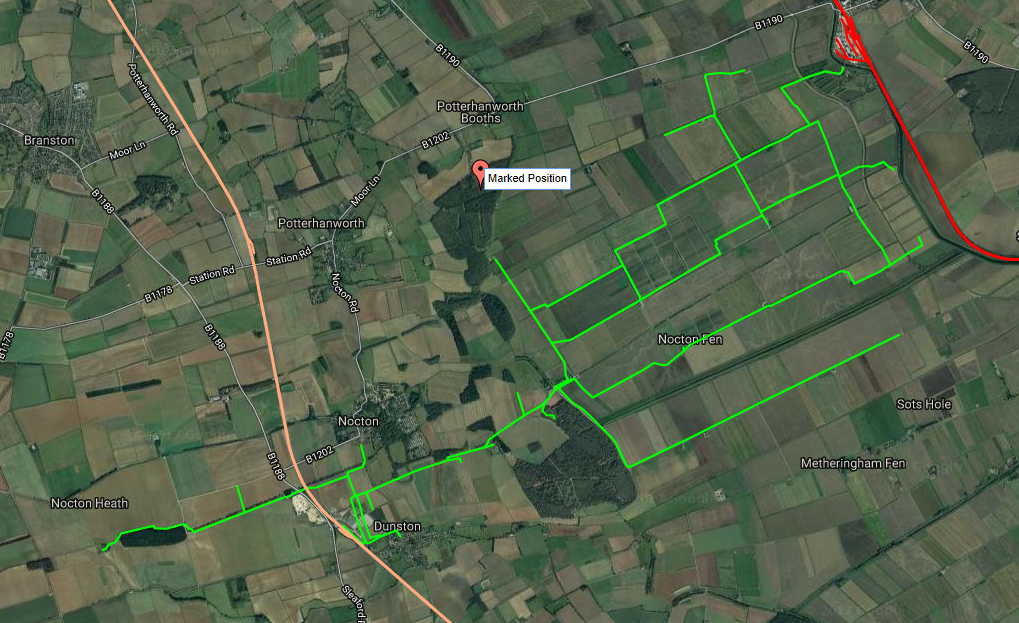
In 1920, W. Dennis & Sons built four miles of 1ft eleven and half inch gauge rail at Nocton on the heavy fenland east of Wasp's Nest. Trucks were originally pulled by horses or pushed by hand. The line was greatly extended after 1926 to connect the fen to the railhead at the centre of operations, close to the standard gauge railway between Lincoln-Sleaford (now the MAC Ltd facility). A small stone quarry was also connected by a line. In total the Nocton Estate Light Railway (NELR) extended to almost 23 miles of track.

In the 1930's a further extension was planned to be laid northwards through Nocton to Manor Farm, but this was refused permission by the County Council, so the line ended at Wray's Yard. The NELR was to become the largest and longest lived agricultural narrow gauge in the county, if not the country.

The NELR served every aspect of the farming operation, by transporting a variety of produce (mainly potatoes, grain and sugar beet). It also carried muck for spreading, coal for the pumping engine on the fen, food and water for the livestock and provided a regular water supply to the many farms and cottages remote from the villages (the water was loaded into large water tanks mounted on converted wagons). It even delivered the post in the guard vans.


There was even a special passenger coach (called the Queen Mary) provided exclusively for the shooting parties. Staff were also regularly carried in the wagons. Gangs of potato pickers were collected from the main train line and transported into the fields for work.

A couple of steam engines were purchased to pull the loads, one was a Fowler 0-6-0 tank engine, but the other has not been able to be identified. Built in 1926, the Fowler 0-6-0 was built new for the NELR. For the enthusiasts, its works number was 16991.

The Fowler 0-6-0 had a greater shunting capacity over the smaller Simplex engines and was purchased to run the 'main line' of the Nocton Estate. The petrol-fuelled Simplex engines acted in support, operating down the many spur lines into the fields. Unfortunately, the Fowler proved too heavy for the track and she was sold after just 4 years of service to George Cohen and Sons - a scrap metal merchant. I understand this tank engine was offered for sale again in 1937, but with no offers she was sadly scrapped at Burnhope, Co Durham in 1938.

Of course, all steam engines require a water supply to operate efficiently. In addition to the two steam tank engines, there were steam traction engines and ploughing sets operating in the fields, and there was a wider requirement for a supply of water around the estate, as mentioned earlier.

To avoid having to return to the centre of operations at the railhead to obtain water, a series of  standpipes were provided in various locations around the estate. We have now identified one such standpipe, located on the bridleway between Nocton and Dunston - and there was another on Nocton Fen, but its exact location is now unknown.

In later years, as tractors started to take over from the steam engines, there was a new requirement for the NELR, as fuel had to be transported around the estate. This was done in specially converted wagons, so that the tractors could be filled up locally.

In 1955, the NELR was still operating, carrying around 17,000 tons of produce per annum. However, work to improve the estate roads started in earnest to enable lorries to access the fields directly, so by the end of the 1960's, much of the light railway had closed.

There are very few physical reminders of the NELR remaining on the estate. When the author wrote his book 'The Lincolnshire Potato Railways', there were still some remains of track at the railhead both inside and outside the grain mill on the MAC Ltd site, along with some old water tanks removed from the wagons. There was also some track over a culvert running towards the old pump station on the fen.

Although, many of the items above may no longer be in situ, we can report that one of the standpipes is still in its rightful place - the one on the Nocton to Dunston bridleway.

Accreditations

I can recommend viewing the many fascinating photographs and images of the Nocton Estate Light Railway on the 'Lincolnshire Coast Light Railway - History' web-link.

Much of the equipment found on the LCLR owes its survival to being utilised on the Nocton Estate. The oldest locomotive is one of the Simplex 20HP bow-framed units (Motor Rail No. 1935 dated 1920), however the original Dorman petrol engine has been replaced by a diesel. As can be seen from the photograph above, the name plate on the unit commemorates 'Nocton' as its place of work.


You may also like to know a Nocton Estate Light Railway inspired model (4mm scale - 9mm gauge track, representing the narrow gauge) was built for the Staffordshire 'Tracks to the Trenches 2014' Great War Centenary event.


There is a video on YouTube that gives you an idea of what these narrow gauge railways were like


I have managed to locate a website (Rail Map Online) that shows the route of the Nocton Estate Light Railway overlaid onto a map so we can see its exact route over the topography of the area.


View focused on railhead

The full route of Nocton Estate Light Railway

Main extracts from:
  • 'The Lincolnshire Potato Railways by Stewart. E. Squires - ISBN 0 85361 352 4]
Minor extracts are from:

Sunday, 17 December 2017

Parish Council - update from Ben Wills

Beeswax Dyson Farming

There was an update from Ben Wills of Beeswax Dyson Farming about current and proposed developments on their Nocton Estate at the Parish Council meeting on 12 Dec 2017.

I have supplemented this report with more information from the internet:

Nocton Wood House - new admin centre

The mezzanine and office fit out was completed by Acorn Partitions & Storage Systems Ltd: "This involved a conversion of the large estate building into modern commercial offices.  The works included interior design by the in-house design team, installation of a mezzanine floor and staircase, glass partitions to create offices and meeting rooms, decoration works and supply of all office furniture."

The Beeswax team moved into their newly refurbished premises on Monday 11 December.

Nocton Wood House
photo by James Thompson [Instagram]
Nocton Wood House
photo by Geoff Hall [15 Dec 2017]


Nocton Woods - Farm Complex

The new complex is pretty much complete as envisaged in the planning application 16/0654/FUL. With the access to the new facilities this year, it has resulted in an 'easy' harvest.

There is another planning application 17/1703/FUL under consideration, for a new potato store building. This will be located alongside the Amenity Block on the new farm complex and will be set back on the site to minimise its impact on the horizon from Wasp's Nest. In any case, the ridge height of the building will be much lower than the Grain Store. Furthermore, the protective 'bund', when fully planted out, will also help merge everything into the landscape.

The plans are to grow potatoes on circa 150 hectares of land, producing somewhere in the region of 7,500 tonnes. The potato plant has a high water requirement and a shallow rooting system, making it vulnerable to drought. However, as reported in my blog dated 02 Jun 2017 about my visit to the Nocton estate, the irrigation factors are well catered for.

Amenity Block and Grain Store
photo by Geoff Hall [15 Dec 2017]
Newly-constructed bund
photo by Geoff Hall [15 Dec 2017]

Bund from public footpath
photo by Geoff Hall [15 Dec 2017]
Bund from Wasp's Nest estate road
photo by Geoff Hall [15 Dec 2017]

Nocton Estate - access

The new access road to the farm complex has been very successful at removing heavy farm machinery away from those areas with public access. However, there have been occasional issues with pedestrians, cyclists and motorists using this new access as a public highway - when in fact it is a private road only to be used for farm business.

Beeswax Dyson Farming don't really want to install barriers on each junction so are considering other measures e.g. signage. The new road will be named 'Cyclone Way', chosen by Sir James Dyson after an internal competition for suitable suggestions.

The Old Sleaford Road access at Top Lodge is now going to have stone walls and pillars reinstated to deter any heavy plant and machinery turning down this road. The plan is to try and reproduce what the entrance was like from old photographs, even down to replacing the Dragons holding the Ripon Coat of Arms on the top of the pillars if these can be located.

The Marquess of Ripon's Coat of Arms incorporates a shield depicting three 'stags at bay' and an inverted V, with a central smaller shield embossed with a Royal Coat of Arms of three rampant lions, a harp and two roses.
[Source: 'Nocton: The Last Years of an Estate Village - Vol 1 by Sheila Redshaw and Sue Morris]

Top Lodge gateway - off Sleaford Old Rd

Dragons holding the Ripon Coat of Arms


Wasp's Nest - Old Fen Workshop

There is a planning application 17/0347/FUL relating to the conversion of this old workshop into a building for functions, meetings and staff training. It is hoped this work will commence soon.

Use of new technology

The use of imaging technology is being used to great effect, highlighting those areas of crop that require more fertilisation or irrigation. The spraying machinery can target specific areas, rather than treating the whole area, saving on wastage and unnecessary costs.

'Beeswax Dyson Farming is high on technology with widespread use of drones and self-drive tractors and machinery. Small agricultural robots, now being tested, are forecast to replace large tractors with major savings in costs.'

Source: https://www.farmweb.co.uk/news-events/newsletters/2017/farmweb-news-29112017/

Developments in corporate culture are to be found too

'Beeswax Dyson Farming, Britain’s largest farming company, invests considerably more of its profits back into the environment than EU law requires. From anaerobic digesters that turn waste food into electricity to drones which save bird nests from combine harvesters, Beeswax Dyson is fully committed to a policy of environmental and wildlife protection.

In its owner’s own words, ‘We do far, far more than we need to’.'

Source: http://www.cps.org.uk/blog/q/date/2017/11/24/would-the-environment-be-safe-in-the-free-market-s-hands/

Wednesday, 29 November 2017

Red telephone box - Wasps Nest

Refurbishment complete

I refer to my blog dated 11 Oct 2017 and can report the red telephone box at Wasps Nest has now been fully refurbished.

Refurbished telephone box at Wasps Nest
What a super job. It will be interesting to see how this will be used... perhaps it can be used as a source of history relating to Wasps Nest?

Why is it called Wasps Nest?


There are many theories. One story that seems to hold more credence than others was related by an old woman [Granny Clayton] who used to live down Nocton Fen. According to her, the original Wasps Nest was a building that had an outer door from every room to the yard - a bit like the cells of a wasp's nest. It was rumoured to be a haunt of highwaymen in years past, as it provided many alternative escape routes. There was even a priest's hole located in the chimney to provide a convenient hiding place.

The cottages and houses on the fen never had electricity or mains water. The estate management decided not to spend money modernising these buildings, but concentrated on modernising the tied properties in the main villages of Dunston and Nocton. Over time, the fen families were moved into the village properties, leaving many of the fen properties vacant and abandoned. These were then demolished during the 1960's.

The remaining houses near the top of the fen at Wasps Nest were saved from demolition by their comparative good state of repair.

There used to be an active Nocton Fen Social Club at Wasps Nest for the use of the many people who lived down the fen. The Wasp Nest Hall was used just like the other two village halls at Nocton and Dunston. It was finally closed in 1959 due to the reduction in population on the fen.

Nocton Fen Rd, Wasps Nest - with estate access bridge over Carr Dyke

Abbey Hill Cottages, Wasps Nest - footbridge over Carr Dyke


Nocton Park Priory


Just above Wasp Nest is an area known as Abbey Hill containing old ruins [Explorer 272 GR 07736478]. This was an old Priory for Black Canons of the Order of St Augustine - so called from the colour of their robes. There are no ruins above ground, with only the undulations and mounds in the land showing where the foundations are located.

It was Robert D'Arcy who founded the Priory in the Park at Nocton, dedicated to St Mary Magdelene for a Prior and four Canons of the Order of St Augustine. The only remains of it are some large stones, broken hillocks and uneven turf on the rising ground which overlooks Nocton Fen. Some broken pottery was found on the site a few years ago and presented to Lincoln Museum. The ashes of a Mr JH Dennis (who latterly owned the Nocton Estate) are scattered in a small fenced enclosure on the site.

There is an eight page ‘Information Sheet’ published by Lincolnshire County Council: Lincolnshire Museums. It was written and compiled by Timothy Ambrose, City and County Museum, Lincoln - July 1979. The sheet is titled ‘Nocton Park Priory’ and is referenced: Archaeology Series No. 15.

There was a searchlight battery stationed on the Abbey Hill during the 2nd World War, owing to the number of important bomber airfields located nearby. There was even a dummy airfield laid out at Partridge Farm on the fen, consisting of reflectors and lights, which were switched on to confuse enemy fighters when they were in the area.

Sources:
  1. Nocton: The Last Years of an Estate Village Vol 1 - by Sheila Redshaw and Sue Morris
  2. A Lincolnshire Lad Looks Back - by Len Woodhead
  3. Historic England
  4. Lincolnshire County Council - Information Sheet Archaeology Series No.15 - Nocton Park Priory

Friday, 2 June 2017

Nocton Estate - major improvements

Beeswax Dyson Farming

I would like to thank Ben Wills (Head of Property) for inviting me for a tour of the many improvements taking place on Nocton Estate. It was good to be introduced to James Thompson (Head of Farming) too.
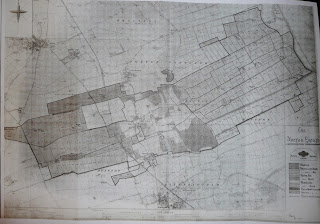
Nocton Estate - plan

Overall, I found this a most interesting visit and was left very impressed with the professionalism of management, the ethical aims of this company and extent of investment involved in this major project.

This is a report of my visit and the many facets of work currently being undertaken.

New relief road

Steady progress is being made with the new road foundations, involving tonnes of crushed stone. The local stone is rather too soft for effective compacting, therefore road stone is having to be sourced elsewhere and trucked in. To avoid the edges of the road breaking up on completion, an innovative process will be used to lay the kerbing.

Relief road - under construction

Instead of installing pre-cast concrete kerbs, a powered machine will pour and shape concrete kerbing in a continuous flow, forming the boundary of the road surface. I believe the official term is slip-form construction. A top surface will then be laid to complete the new road.

However, there is yet more stone to be laid before this work can take place and currently the contractors are constructing the bridleway crossing point between Nocton/Dunston. Public access between the two villages is being maintained throughout the construction work.

Cricket field

New fencing has been erected around the cricket pitch and gates inserted for easy access/egress to the surrounding field. Beeswax Dyson Farming have also been instrumental in improving the grounds with heavy rolling.

Support may yet extend to refurbishing/renewing the old cricket pavilion, which is now reaching the end of its lifespan. This would transform the area and improve the facilities no end for Nocton Cricket Club.

Nocton Cricket Club - super location


Nocton Wood House

It has been decided to convert this residential property into the main Head Office of the company administration. This will involve converting rooms into offices, creating a boardroom and opening out the interior. There will also be a couple of self contained flats for any overnight visitors

As part of this work, a large ground to roof level window will be inserted to the right of the main entrance, with a similar window to the rear, allowing clear and panoramic views over the countryside.

Contractors are already on-site and work is ongoing to make the necessary changes. This will create a unique working environment for the administration staff of the Beeswax Dyson Farming empire.

Nocton Wood House - 2012

Farm complex

The construction of this huge complex is well underway. The concrete apron is currently being poured and the main access to the yard is almost complete.

Grain store and amenity block - a major development

The grain store has been fully erected and fitting out is underway in readiness for the main harvest this year. I think it is fair to say that Beeswax Dyson Farming have been struggling somewhat with the existing facilities on the estate. This new complex will therefore transform operations, enabling greater efficiency and improving cost effectiveness too.

The main steelwork for the amenity block has now been erected and will incorporate many facilities:
  • a shower-block with lockers and canteen
  • a weighbridge office
  • a farm office with meeting rooms
  • a laboratory
  • a chemical store
  • a sprayer fill area
  • a workshop and materials/equipment store
  • a covered storage area for plant/machinery

Amenity block erected - concrete apron being laid

Whilst the new farm complex is well-sited in the landscape, further measures will take place to screen the facility from Wasp's Nest residents. The land adjacent to the private farm track will be raised by an embankment and will be planted with vegetation for this purpose.

Farm complex - view from Wasp's Nest

Nocton Wood

It could be argued that over the years Nocton Wood has been somewhat neglected, becoming rather overgrown and uncared for. Some people think that woods are better left untouched to become a haven for wildlife, but that is not always beneficial. Left unchecked, invasive species can take over and light will be restricted by a congested canopy. With traditional woodland practices on the decline, many woods now lack open space and sunlight on the woodland floor, restricting those flowers and butterflies that favour open-space environments.

Nocton Wood - invasive rhododendrons

I am therefore pleased to report that Beeswax Dyson Farming have continued to thin out and care for the woodland. Not only does this provide supplies of timber and coppice products, but will also create a diversity of habitat.

Nocton Wood - timber awaiting removal

Some of our best-loved woodland wildlife depends for its survival on woodland management – woodland wild flowers and butterflies flourish in these traditionally managed woods. Woodland management doesn't mean being too clinical with clearance though. By leaving dead wood and old trees, birds like woodpeckers, lots of interesting beetles and a range of fascinating fungi can be encouraged too.

Fascinating fungi

I happened to mention to Ben about The Nine Brethren that is thought to be an ancient boundary marker. I was encouraged to hear that work is taking place to halt its decline, by diverting the old track from the base of this ancient tree, thus avoiding any further compression/damage to its root expanse, aiding it to recover. Nocton Wood is an important non-SSSI site for the area and deserves careful attention.

Promoting wildlife corridors

Extensive work has been undertaken to create margins and meadows for wildflowers and grasses to promote and sustain wildlife around the farm. This has been quite a challenge in that farming soil is generally very fertile and yet wildflowers require poor soils to thrive. Numerous owl boxes have been erected around the estate to promote nesting sites for these lovely birds and these are starting to be occupied already.

Nocton Estate - wildflower meadow
One of the many owl boxes

Inquisitive lapwing

Subsidies and Brexit

I asked about the potential impacts of leaving the EU and unsurprisingly find that Beeswax Dyson Farming are already in talks with the Country Land and Business Association Limited (CLA) over this matter.

With regard to Countryside Stewardship grants, these are protected for the time being. Yet even if they were to continue, the Beeswax Dyson Farming empire have already invested far in excess of the grant returns currently.

I understand that on average, 60% of farm incomes come in the form of EU subsidies, so it could have a material effect on landowners should entitlement change.

"One of the tasks that we will have when we leave the European Union is to decide what support is provided to agriculture as a result of being outside the common agricultural policy."
Prime Minister Theresa May


HM Government has promised to match the EU subsidies up until 2020, but beyond that it has promised nothing. It remains to be seen quite what the actual impacts will be.

Improvements to drainage and irrigation

Many fields on the estate have had new land drains installed. The drainage dykes and waterways have also been dug out to improve and increase flows.

This prompted me to ask about water conservation in general and about licences for extraction.

On the Fen, drainage dykes have been restricted allowing water to be retained, enabling moisture to seep into soils underneath the crops reducing the need for overhead spraying.

As a further example of minimising water use, I was shown a field of potatoes which had dribble pipes providing sustainable irrigation right to the point of requirement.

There are sufficient licences for extraction, but the estate could benefit from having more reservoirs constructed. This could be another improvement project in the future.

Beeswax Dyson Farming has representation on the Witham Drainage Board.

Anaerobic Digester

This facility is currently shutdown whilst a 30,000-hour service is undertaken. Since my last visit, much improvement has been made to this site, with a new concrete apron and bunding installed, together with a ramp for 'feeding' the digester. Large silage clamps have been installed as well.

Furthermore, landscaping has been improved to help screen the facility and a new access road is currently being laid to replace the rough surface track.

Anaerobic digester - 2011

The high voltage electricity output from this facility will be utilised to power the new farm complex, and possibly the administration centre at Nocton Wood House too. Any excess supply will be returned to the National Grid.

Saving old buildings

It is good to see efforts being made to save old derelict buildings on the estate, giving them a new life/purpose. One such example is a rather distressed brick-built barn on the Fen that has seen better times. The plan is to re-purpose this into a new wildlife 'home', incorporating nesting boxes for owls and other birds, with bat boxes included too.

There are also plans in place for the sensitive conversion of an existing farm workshop on the Fen to provide facilities for meetings, functions and staff training together with formation of paved areas to the entrances and car parking.

This demonstrates Beeswax Dyson Farming property portfolio mantra in action:

"Dilapidated? Never in our eyes. All over the estate, we’re bringing new life to old buildings, keeping a keen focus on the building’s history and surrounding landscape as we go."

I do hope this drive and determination to succeed, will see other major buildings hugely important to the historical heart of the Nocton Estate, resurrected and renovated so they are not lost forever.

Historical heart of Nocton Estate

Management and Leadership

It certainly appears the company place great emphasis on good leadership and teamwork. It provides opportunities for employees to develop competences, nurturing them as a part of the Beeswax team, in readiness for progression into more senior roles.

My first impressions are of a close knit team - I particularly liked to see the senior managers stopping at every opportunity to have a word with staff working on-site... and I wasn't left out from this, by being introduced to them too.

It was all very inclusive and certainly promotes the ethos of a 'family' concern in the widest sense. Nice to see these 'soft skills' still being fostered in this day and age of lean management, profit margins and bottom lines.

Lincoln University

As might be expected for a company connected to Sir James Dyson, it is very interested about bringing more innovation to the farming industry. In fact, our very own University of Lincoln has the Lincoln Centre for Autonomous Systems whose research is at the forefront of advances in agri-tech and agri-food specialisms.

I understand Beeswax Dyson Farming have already developed a connection with this team.

Farm tours

A new trailer has been requisitioned for tours. Pupils from Nocton School were one of the first to experience this.

In the next couple of months, a tour is also planned for members of The Worshipful Company of Farmers... and other tours will take place to showcase the excellent work being carried out by Beeswax Dyson Farming on Nocton Estate.

Final thoughts

It is my belief the local community are very privileged to have Beeswax Dyson Farming now owning and maintaining the surrounding land that is Nocton Estate.

What I have seen in action every bit validates the mission statements on their website:

"Our aim is to improve the quality of our assets as a whole for the benefit of future generations. We aim to deliver profit and asset growth through good management... at Beeswax Dyson Farming, a huge element of our ethos lies in protecting the land. We want to maintain and optimise it, so that future generations can enjoy it, just as we do."

Long may this continue.
Tuesday, 11 April 2017

Planning application - Nocton Fen

Planning Application: 17/0347/FUL

Keepers Cottage, Wasps Nest, Nocton Fen Lane, Nocton, Lincoln, Lincolnshire, LN4 2AY

Conversion of existing farm workshop into a function building with facilities for meetings, functions and staff training together with formation of paved areas to the entrances and car parking.

Application received: 09 Mar 2017
Validated: 17 Mar 2017
Expiry: 28 Apr 2017
Deadline: 12 May 2017

Case Officer: Tony Sergeant
Applicant: Ben Wills (Beeswax Dyson Farming Ltd)

Tuesday, 20 September 2016

Beeswax Farming - constant improvement

Anaerobic Digester Plant, Nocton Fen

Danish technology allows facilities to process difficult biomass

Beeswax Farming’s new biogas plant is the first in the UK to be equipped with new biomass pre-treatment equipment manufactured by Xergi.

http://www.endswasteandbioenergy.com/article/1391070/first-uk-use-new-technology-biogas-plant

Modular T walls & Earth Clamp Walls

It was clear that the old clamp was not fit for purpose and would require a new system to meet UK regulations and also provide the capacity silage required by the AD plant.

http://www.modularcubed.co.uk/beeswax-farming/

Power generation

Cummins ESB installed the site power distribution and the low voltage to high voltage stepup transformer.

http://power.cummins.com/sites/default/files/literature/casehistories/EMEACH-5789-EN.pdf

Nocton Fen AD Unit

The information presented here is gathered from the reports published by Ofgem.

http://www.variablepitch.co.uk/stations/1624/

Wednesday, 6 July 2016

Anaerobic Digesters - good or bad?

Nocton Fen AD

My research into these type of facility started with the Nocton Dairy campaign. I have previously reported on the construction of the anaerobic digester on Nocton Fen - which is now owned by Beeswax Farming Ltd:
This particular digester was commissioned in 2011. It has a 12.900 m3 reactor capacity with a 2 MW gas engine application, with a potential annual production of 16 MW of electricity and heat.

I have since discovered two notices related to this digester that were served by the Enforcement Agency:
  1. Beeswax Farming (Rainbow) Ltd - Nocton Digester LN4 2AY - EPR Reg 36 - Comply with conditions and remedy pollution [Case Ref: 19727 - 29/04/2014]
  2. Beeswax Farming (Rainbow) Ltd - Nocton Digester LN4 2AY - EPR 07 Reg 38 (1)(b) [Case Ref: 19727 - 30/05/2014]

What are the benefits of anaerobic digesters?


Anaerobic digestion was initially designed to provide an opportunity to generate 100 per cent renewable energy from biodegradable waste. The organic material is broken down producing biogas for both heat and power... and this can be converted into a healthy financial return.

The income involves a government Feed in Tariff (FiT) and Renewable Heat Incentive (RHI), which can provide an attractive 20-year income for renewable energy generation. Other incentives are also available, such as grants to assess feasibility of on-farm anaerobic digestion and business planning.

Furthermore, the nutrient rich digestate that is a by-product of the anaerobic digestion process can save money by replacing expensive chemical fertilisers. But all this also comes at a cost.

What are the costs of anaerobic digesters?


There is a large capital investment of building the facility in the first place.

The material that is used in anaerobic digestion is called feedstock. It was always intended that land unsuitable for the production of food crops was the sustainable option for the supply of biomass for anaerobic digester plants. However, good agricultural land is increasingly being used to grow crops purely for energy production.

The diversion of land use from human food supply to energy use is very much a contentious issue and it is important to be mindful of future unintended consequences should there be significant areas of productive agricultural land grown for energy production.

Finally, there is the ongoing specialist skill required to operate these anaerobic digestion plants effectively, efficiently and safely.

What is involved?


Basically, what goes into an anaerobic digester determines what comes out, so a careful choice of feedstock is essential. There are three potential types of feedstock that can go into an anaerobic digester:
  1. Food waste - Industrial, commercial and domestic.
  2. Agricultural residues - These include animal wastes such as cattle and pig slurry, manures, feed waste and bedding.
  3. Energy/Arable crops - Purpose grown crops cultivated for their high calorific value. The key crops used in the UK are maize silage, grass silage and whole crop cereals.
I seem to recall Nocton Fen anaerobic digester is only licensed to process energy and arable crop feedstock. As such, securing a reliable feedstock supply is fundamental to profitable anaerobic digestion.

The anaerobic digestion process is a treatment that composts feedstock in the absence of oxygen, producing biogas that can then be used to generate electricity and heat. As well as biogas, the digester produces a solid and liquid residue called digestate, which is used as an organic soil conditioner to fertilise the land. This can achieve increased crop yields by improving the soil with careful application. However, because digestate is derived from an anaerobic digestion process (devoid of oxygen), it contains only anaerobic microorganisms.

Agriculture normally requires aerobic conditions, and actually anaerobic conditions can lead to severe problems. For example worms don't like anaerobic conditions and require aerobic conditions in order to thrive, no different from plants, or humans. Scientific literature is very clear that anaerobic processes result in outputs that can be highly toxic, and not at all beneficial to plants.

Fortunately, as long as the anaerobic digester is managed properly, the health risk from the solid and liquid residue from an anaerobic digester plant should be low. This will ensure no chemical contaminants are entering the system. It is crucial to analyse the chemical content of the digestate produced, select the best manner of application and to calculate the correct irrigation dose and frequency, maintaining records diligently for inspection when required.

Digestate is a rich source of nutrients for plants; and assuming it is not full of contaminants, it should serve the land well.

Anaerobic Digestion Explained - in more detail.

Thursday, 18 February 2016

Wind Farm... subsidies in another name

Nocton Fen wind farm plan scrapped over 'risk'

'The firm said they were disappointed to pull out but recent changes in government policy introduced "increased risk" into the project.'

http://www.bbc.co.uk/news/uk-england-lincolnshire-33722044

Britain abandons onshore wind just as new technology makes it cheap

'Amber Rudd, Secretary of Energy and Climate Change, drastically revised policy last year, announcing that support for onshore wind would be cut from April 2016. She said 250 wind farms in the planning phase were unlikely to be built as a result but insisted that Britain was “reaching the limits of what is affordable, and what the public is prepared to accept”.'

http://www.telegraph.co.uk/finance/economics/12090394/Britain-abandons-onshore-wind-just-as-new-technology-makes-it-cheap.html

Revealed: the great wind farm tax 'con'

'Ministers may break pledge to stop funding onshore turbines with consumer subsidies.'

http://www.telegraph.co.uk/news/earth/energy/12156171/Revealed-the-great-wind-farm-tax-con.html

Are the Conservatives now succumbing to intensive lobbying from the wind energy sector, threatening a resurrection of plans for a huge wind farm on Nocton Fen?

Quote: 'The proposal being considered by the Department of Energy and Climate Change (DECC) would see onshore wind farms continue to qualify for an existing subsidy scheme that guarantees developers a fixed price for electricity generated.'

Local residents will need to keep a close eye on how the politics of this develops, as there seem to be slightly conflicting messages - let's make sure we Protect Nocton Fen!

Government vows to end new public subsidies for onshore wind farms

'The Government vowed yesterday to keep its promise to end new public subsidies for onshore wind farms.'

http://www.express.co.uk/news/politics/644141/Government-end-public-subsidies-onshore-wind-farms

Onshore wind farm subsidies could continue on islands

'Ministers face fresh accusations of breaking their manifesto commitment to end onshore wind subsidies.'

http://www.telegraph.co.uk/news/earth/energy/windpower/12165896/Onshore-wind-farm-subsidies-could-continue-on-islands.html

Tuesday, 14 July 2015

Nocton Fen Wind Farm - exit poll

PNF email Nocton Parish Council

I have received a copy of an email which has been sent to the Clerk of Nocton Parish Council by the Chairperson of PNF, in readiness for the meeting tonight.

You might like to see the enclosure (copy below) summarising the results of an Exit Poll conducted by PNF at the Vattenfall public information sessions during June 2015.


This shows that out of 449 people surveyed, only 6% were for the wind farm, 15% were undecided or wished not to say and 79% were against the development.

Last chance for residents to comment on Nocton Fen wind farm proposals

'Residents are being urged to not miss out on giving their views on plans for a proposed wind farm in a village south east of Lincoln.'

http://thelincolnite.co.uk/2015/07/last-chance-for-residents-to-comment-on-nocton-fen-wind-farm-proposals/

Friday, 3 July 2015

Nocton Fen Wind Farm - objections

Vattenfall E-newsletter 13 - reminder


"Nocton Fen Statutory Consultation continues following public events

Over 475 residents attended our local events last month to have their say as part of the Statutory Consultation on our proposed project at Nocton Fen. We are now over half way through the consultation period and encourage you to continue to get involved and give us your views before the consultation closes on Monday 20 July.

Information on display at our event at Potterhanworth Memorial Hall

A copy of the Preliminary Environmental Information, Non Technical Summary (NTS), Community Investment Booklet, our Statement of Community Consultation, and a Consultation Feedback Form is available in hard copy format at various locations. You can also have your say online where all of the information is available to download.

You are receiving this newsletter as you have registered your interest in Nocton Fen. To unsubscribe email noctonfen@vattenfall.com.
Vattenfall Wind Power Ltd, Abbey Warehouse, Abbey Slip, Penzance, TR18 4AR.
T: 0800 3777348, E: noctonfen@vattenfall.com http://www.vattenfall.co.uk/noctonfen. You can now follow us on Twitter @NoctonFen."

Local Objections - making your voice heard locally

"Dear All,

Following on from Vattenfall's open public events, we now move into a period where Vattenfall will finalise their application before submission in the first  part of 2016.  Though the Government will remove subsidies from new onshore wind farms, Vattenfall are very clear that they will press ahead with this application.

This is also the period where we need to start making our objections known. PNF took an exit poll at all public events (Nocton, Potterhanworth, Bardney, Metheringham, Dunston and Branston), and the results were very conclusive. Of 423 people asked as they left the events and who gave an answer, 84% were against the wind farm, 6% for and the rest were undecided (10%). So amongst the local community, it is very clear the this development is not wanted.

However, we have heard that some Parish Councils have not been contacted with the views of by their parishioners. At this first stage, it is important that the Parish Councils are aware of your objections from their parishioners, so we ask that as many people write to the Parish Councils via the Clerks to voice their objections.
This is only the first stage of objections, but it is an important one.  We will be writing to you later in the year to detail how else we can object.

Best wishes,
PNF"

Stephen Phillips QC MP

'To ask the Secretary of State for Energy and Climate Change, with reference to the Written Statement of 18 June 2015, HC WS40, whether her Department plans to offer support under the enewables Obligation to the proposed Nocton Fen wind farm.'

Thursday, 2 July 2015

Nocton Fen Wind Farm - infrastructure

Infrastructure and Communications

Chapter 16 of the Preliminary Environmental Information assesses the impact on telecommunications, infrastructure and broadcast services.

I have concentrated on selecting those paragraphs which relate to the airwaves, rather than the 'hard' infrastructure, such overhead wiring, or underground piping/wiring.

Para 16.1.3: '... The results have shown there are National Grid pipelines, Anglian Water clean water pipes, Western Power Distribution electrical infrastructure and a number of microwave communication links both within the site and its close vicinity.'

Para 16.2.2: 'National Policy Statement for Renewable Energy Infrastructure (EN-3) is the overarching planning policy for NSIP wind farm applications... However, it makes no mention of the assessments required with regards to onshore wind farms and existing infrastructure, telecommunications and broadcast services.'

Para 16.2.4: '... Wind turbines can potentially affect electromagnetic transmissions (e.g. radio, television and phone signals)...'

Para 16.2.6: 'Since a large number of bodies use communications systems and some of the users are commercially sensitive or of strategic military importance, consultation with the relevant authorities/bodies is important...'

Para 16.3.20: 'It is known that wind turbines have the potential to adversely affect terrestrial reception up to a maximum distance of 5km (Ofcom, 2009). There are a number of properties within 5km of the Site, and so the potential for interference is established. However, all transmitters in the UK are now fully switched over to digital signals, which reduces the likelihood or interference with the television signal.'

Para 16.5.5: 'Wind farms can also affect electromagnetic signals...'

Para 16.5.7: 'An area has been identified (see Figure 1.4) for potential measures to mitigate effects on microwave links crossing the site... Consultation is still ongoing regarding the measures required...'

Para 16.7.11: '... Larger residential areas, such as Bardney and Nocton are approximately 1.75km away from the nearest turbines. It is therefore unlikely that a significant deterioration in signal would be experienced.'

Para 16.11.10: 'Discussions with JRC have led to the conclusion that 3 scanning links, and one fixed link will be affected unacceptably by the Project unless suitable mitigation is implemented. It has therefore been provisionally agreed by the Applicant will finance a technical solution to remove the interference...'

Para 16.11.12: 'In the unlikely event of a reduction in television reception quality occurring in the surrounding area, it is most likely to be noticed when the Project becomes operational... the Applicant will accept a Requirement to assess current television signals in advance of the construction of the Project and mitigate post-development problems with television reception arising where effects are attributable to it.'

Para 16.11.13: '... and to implement solutions in a timely manner so as to minimise any inconvenience to residents...'

Table 16.7 - 'A mixed solution is likely to be required which may include: Re-tuning some TVs to an alternative transmitter, which may overcome possible interference for some; and Providing an alternative form of reception, e.g. satellite dish or more powerful aerial.'

My thoughts

Although Para 16.7.11 indicates 'a significant deterioration' of  signal reception is 'unlikely', there is clearly potential for the wind turbines to affect terrestrial TV reception. If it does happen though, it has the potential of significantly disrupting the favourite pastime of watching 'telly'.

Any remedial actions should be taken quickly... by that I mean within 24 hours of the complaint being lodged. It is not satisfactory for people to be left hanging around with a poor TV service, paying out for a licence fee and not being able to watch their favourite programmes. Any costs of providing a remedy... and a replacement service, if the terrestrial option cannot be sorted... should be borne by the applicant.

The NPPF makes no mention of the assessments required with regard to wind farms and existing infrastructure, telecommunications and broadcast services. It can be seen here how it could impact on local residents - a policy paper should therefore be commissioned by HM Government without further delay to have a robust process in place should the 'unlikely' actually come to fruition.

Wednesday, 1 July 2015

Nocton Fen Wind Farm - aviation

Aviation... and wind turbines

The Importance of Lincolnshire in the Defence of the Realm

Wind turbines can interfere with radar, reflecting microwave signals sufficiently to obscure/erase aircraft from a controllers screen... which for obvious reasons isn't a very good thing when the Vattenfall project is such a short distance from RAF Waddington and other crucial bases.

Current MoD and RAF Stations
  1. RAF Barkston Heath - Home to elements of No 3 Flying Training School (3FTS)
  2. RAF Coningsby - 3, 11, 29(R) Squadrons (Eurofighter Typhoon) and 41 (R) (Test and Evaluation Squadron) (Tornado GR4).
  3. RAF Cranwell - Home to RAF College Cranwell, HQ Air Cadets and Officers and Aircrew Selection Centre'.
  4. RAF Digby - Tri-service command establishment (and also US tri-service presence)
  5. RAF Donna Nook - Bombing range
  6. RAF Holbeach - Bombing range
  7. RAF Kirton in Lindsey - Accommodation unit for RAF Scampton personnel
  8. RAF Scampton - Currently home to the Red Arrows, Number 1 Air Control Centre and the 'RAF Mobile Meteorological Unit'.
  9. RAF Waddington - Home to all E-3 Sentry, Sentinel R-1, MQ9-Reaper and RC-135 Air Seeker aircraft.
https://en.wikipedia.org/wiki/List_of_Royal_Air_Force_stations

Inside Britain's drone base

'RAF pilots in rural Lincolnshire are flying drone aircraft on the other side of the world.'

http://www.telegraph.co.uk/news/uknews/defence/10524075/Inside-Britains-drone-base.html

Tour of RAF Reaper 'drone' base

'Take a tour of the RAF base in Lincolnshire...'

http://www.bbc.co.uk/programmes/p02wmp15

Defence review: 'Spend more' on SAS and drones

'The prime minister will also visit RAF Waddington, the UK's drone base in Lincolnshire, from where operators fly unmanned aircraft over Iraq and Syria.'

http://www.bbc.co.uk/news/uk-politics-33500006

RAF jets intercept Russian bomber aircraft off Cornwall

'The Ministry of Defence in London said the Typhoons had been scrambled from RAF Coningsby in Lincolnshire.'

http://www.telegraph.co.uk/news/uknews/defence/11422110/RAF-jets-scrambed-to-intercept-Russian-bomber-aircraft-off-Cornwall.html

RAF Mobile Meteorological Unit

The majority of the RAF Mobile Meteorological Unit (MMU) is based at RAF Scampton. This is a Reserve Force Unit whose role is to provide crucial meteorological (weather) services to our Armed Forces personnel when serving on deployed operations throughout the world.

https://www.gov.uk/government/news/forecasting-the-weather-for-the-raf-in-libya-and-afghanistan

Winds of change – aviation and wind energy

'The growth of wind energy in the UK has created an increasing challenge for aviation and air traffic control in particular.'

http://nats.aero/blog/2013/10/winds-of-change-aviation-and-wind-energy/

Preliminary Environmental Information

Vol 1. Chapter 15 - Aviation

Para 15.1.3: 'The potential for the Project to have an effect on aviation interests has been considered, either in terms of Air Traffic Control (ATC) radars or flight operations of the National Air Traffic Services (NATS), the Ministry of Defence (MoD) Low Flying System (UKLFS) and aerodrome operations at RAF Waddington, Coningsby, Cranwell and Scampton. A potential effect has further been identified for the UK Met Office Ingham Weather Radar system.'

Para 15.2.15: '... The recommended consultation zone within the vicinity of an aerodrome with a surveillance radar facility is 30 kilometres (km). However, it is acknowledged that objections from beyond the recommended aviation stakeholder consultation distances can potentially be sustainable and valid...'

Para 15.7.3: '... turbines may resemble real aircraft targets and could also mask genuine aircraft returns... The radar may also be de-sensitised by clutter processing within the sector containing turbines, resulting in real aircraft targets disappearing from the radar display screen.'

Para 15.7.5: '... At proposed blade tip heights of 149.5m, the Project is highly likely to cause clutter to be presented on ATC display screens.'

Para 15.7.9: 'The Project is located within LFA11 and may present a restriction to the flow of low flying aircraft.'

Para 15.7.10: '... it is acknowledged that there is an increased risk in low-visibility conditions, where pilots performing high energy manoeuvres could experience a delay in visually acquiring obstacles, such as turbines, hence resulting in a potentially unsafe situation.'

Para 15.10.1: 'It is known that ANSPs have concerns regarding the increasing impact of wind turbines on radar and operations in the region, and it is acknowledged that additional wind development has the potential to lead to cumulative effects. The combined effect of numerous turbines or multiple wind farms can be difficult to mitigate...'

Para 15.10.2: 'There are a number of operational, consented and proposed wind farms, at various stages in the planning process, within 40km of the Project.'

Para 15.10.3: ' None... are located within 20km of the Project as such, this is not likely to present a cumulative impact concern.'

Para 15.11: '...The Project Raytheon Modification solution aims to remove the turbine-generated clutter from a controller's display screen whilst ensuring the essential ability to detect, track and provide navigational assistance to aircraft is maintained.'

Para 15.11.2: '...should a Project RM upgrade to the Claxby PSR be implemented, it is considered likely to be operationally acceptable for mitigation of the effects of the Project on the Claxby PSR. Formal confirmation is awaited; stakeholder consultation is ongoing.'

Para 15.11.3: ' An additional radar sensor can potentially be located within or adjacent to a wind farm... to reject the turbine returns as clutter... to enhance the display by suppressing the turbine returns.'

Para 15.11.5: '... The MoD has accepted a mitigation proposal based on the implementation of a Resolution Infill option, as detailed in Osprey (2014): Nocton Fen Mitigation Strategy Report and agreement is anticipated to be reached through suitable Requirements.'

Para 15.11.7: 'To ensure the continued safe operations of military low flying aircraft, the MoD has stipulated a requirement for the implementation of suitable aviation obstruction lighting...The applicant shall comply fully with these requirements...'

Para 15.12.3: 'The applicant acknowledges that the Project is likely to have a significant effect on the aviation stakeholders... However, the implementation of feasible technical mitigation solutions... would result in the Project having a negligible residual effect on the operations of these receptors.'

Military radar deal paves way for more wind farms across Britain

Thousands more wind turbines can now be built across Britain after energy companies struck behind-the-scenes deals to overcome military objections to wind farms.

http://www.telegraph.co.uk/earth/energy/windpower/8726922/Military-radar-deal-paves-way-for-more-wind-farms-across-Britain.html

Windfarms and the CAA

'The CAA recommends pre-planning consultation to establish both civil and military aviation related issues at the earliest possible stage. We do not formally participate in the pre planning process, however, when a planning application is submitted to a Local Planning Authority the CAA will respond to any consultation sent by the council in question.'

http://www.caa.co.uk/default.aspx?catid=1959

The Aviation Plan: 2015 Update

'In respect of the interaction of wind turbines and aviation interests.'

An interesting extract from p7 'The Task Ahead':
'Whilst there has been clear progress, there is not one single technical mitigation solution that meets operational needs and satisfies safety and regulatory requirements in every circumstance.'

https://www.gov.uk/government/uploads/system/uploads/attachment_data/file/397208/Aviation_Plan_Update_2015_FINAL.pdf

Sunday, 28 June 2015

Nocton Fen Wind Farm - shadow flicker

Chapter 14 - Shadow Flicker

I have selected certain paragraphs from the Preliminary Environmental Information which I feel are pertinent to this matter:

Para 14.2.21: '... All occupied buildings within ten rotor diameters of the proposed turbine locations have been considered. Furthermore, the path of the sun across the sky in the UK is such that only properties within 130 degrees either side of north, relative to the turbines, can be affected.'

Para 14.2.28: '... there is no standard UK guidance on a limit for shadow flicker.'

Para 14.3.1: 'Three occupied buildings have been identified within the assessment area as being in an area which could potentially be affected by shadow flicker.'

These three properties are located north of the Project:
  • 1 & 2 Causeway Cottage, Branston Causeway
  • Old Pumping House, just off Branston Causeway

Para 14.6.6: 'The results show that turbine 20 has the potential to cause shadow flicker effects. The assessment study area shows that turbines 1 - 19 do not have the potential to cause any shadow flicker...'

Para 14.7.5: 'The Applicant is committed to installing a shadow flicker impact control module prior to operation of turbine 20...'

Para 14.8.3: 'With this mitigation measure in place there will be no residual effects arising from the Project.'

Wind turbine shadow flicker study published

'An independent research study into the phenomenon of shadow flicker from wind turbines was today published by DECC.'

https://www.gov.uk/government/news/wind-turbine-shadow-flicker-study-published

Nocton Fen Shadow Flicker Results

Chapter 14 Appendices: Vol 3. Appendix 14.B

If there is no standard UK guidance on the limits for shadow flicker, then perhaps it is time independent research is commissioned to help inform HM Government and the wind energy business on this matter. It is not acceptable to keep saying there isn't current research, or no research/guidance available in this day and age, when the wind energy business is now reaching maturity.

The Falmouth Experience

Video showing the effect of flickering in a home.

Images and Video from Swinford Wind Farm

Copyright: Geoff Hall - Photo of shadow from wind turbine @ Swinford

Glossary

My final reference document is now here.