Whatever happened to...Lincoln's Coronation Coach?
'Complete with footmen and 10 horses, the coach is believed to have been bought by the Nocton Estate from a shop in London who had used it as a window display during the 1953 Coronation.'
http://www.lincolnshireecho.co.uk/whatever-happened-to-lincoln-s-coronation-coach/story-29788208-detail/story.html
Women's Institute
An account of the history of Nocton WI in this blog states: 'The 1954 Garden Party saw the brilliant scaled model of the Coronation Coach and Horses arrive in Nocton.'
Queen's Diamond Jubilee Celebrations
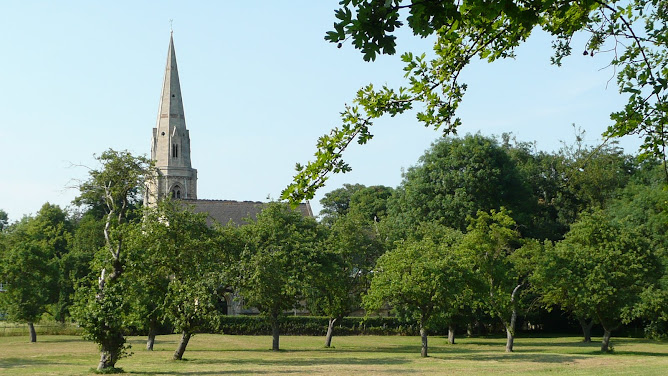
Please also see the report of our own celebrations here in Nocton, showing photographs of the Coronation Coach when it was on display in All Saints Church.
Footnote
It appears Nocton has been safeguarding the Coronation Coach ever since it was displayed in All Saints Church for the Queen's Jubilee Celebrations. I now understand the Mayor’s Officer (Richard Storey) will be making arrangements to collect it, whereupon there is an intention to display it in the Guildhall.
Let's hope there are no further proposals to sell this treasured item, as happened back in 2008.
Showing posts with label Smith's Crisps. Show all posts
Showing posts with label Smith's Crisps. Show all posts
Tuesday, 18 October 2016


Wednesday, 16 December 2015
In the field... Nocton Estate
A Day's Shoot at Nocton Estate
'The Nocton Estate has had a long and chequered history, which has been fairly well documented in the form of at least two books and countless records of village and estate life.'
http://www.lincolnshirelife.co.uk/posts/view/in-the-field...-a-days-shoot-at-nocton-estate
'The Nocton Estate has had a long and chequered history, which has been fairly well documented in the form of at least two books and countless records of village and estate life.'
http://www.lincolnshirelife.co.uk/posts/view/in-the-field...-a-days-shoot-at-nocton-estate
Sunday, 23 June 2013
Our Village Hall
Introduction
I thought the readers of this blog might be interested in some of the background history to our Village Hall, how it came to be owned by the Parish Council and then managed by a Village Hall Management Committee. Much of the information contained below has been gained from my own personal research, during which time I discovered there was a problem with the Title to the land.
Volume 2 of ‘Nocton – The Last Years of an Estate Village’ has been a useful reference, but I have tried to supplement this with other information. All of this data is available in the public domain for those who take the trouble to research it, but as far as I am aware, it has never been brought together in one place in a linear date form. For some it will be old news, but for others it may be of interest.
This will be the first of three blog entries.
Early Days
1936
On the 1st May 1936, James Herbert Dennis sold Nocton Estate to Smith's Potato Crisps (1929) Ltd & Smith's Potato Estates Ltd. During their tenure, a certain Mr Ireson became General Manager. Both he and his wife fulfilled a philanthropic role in the estate community, where they were instrumental in locating an old corrugated iron building from Sleaford Market Place that could be used as a village hall for Nocton.
The building had previously been used as a community centre during the war, housing at one time the Sleaford YMCA. After much negotiation with Sleaford Council, the building was purchased and suitably transferred to Nocton and located on the current site. The Ireson’s also sourced two other Village Halls, one for Dunston and another for Wasp’s Nest.
1946
Smith’s Potato Estates Ltd was the major employer in the area and had a number of tied properties in the village. Many villagers worked on the Estate, spending their leisure time in the Village Hall. There are still fond memories of those times.
Nocton Village Hall was officially opened on 28 September 1946 and soon became the social hub of the community. Over the years many village organisations have used the hall for their activities e.g. Arts Group; Baby Clinic; Bowls Club; Friendship Club; Heritage Group; Parish Council; Social Club; Tufty Club; Women’s Institute; Young Men’s Club and Youth Club. More details can be found in the publication mentioned in my introduction.
1970
All this was about to be threatened though. On the 26 March 1970, Smith's Potato Estates Ltd sold the Nocton Estate to a subsidiary (The Smith's Food Group Ltd) and this soon entered liquidation. The Liquidators sold Nocton Estate to Toms Foods Ltd on 5 February 1971.
Nocton Village Hall and a recreation ground to the rear of the building had only been leased to Nocton Parish Council, but fortunately this was continued by Tom’s Foods Ltd. A new lease was prepared, dated 25 March 1973 and scheduled for 30 years, but before long the Nocton Estate changed hands again, this time to British Field Products Ltd.
1975
The sale of Nocton Estate to British Field Products Ltd took place on 4 August 1975 at a cost of £3,098,000. British Field Products was actually a subsidiary company of the Guardian Royal Insurance Group and traded as 'Nocton Farms Ltd'.
It was during their period of ownership that Nocton Village Hall came to be owned by the Parish Council. British Field Products Ltd made a generous offer to legally transfer the Village Hall and its associated land to the Parish Council for the benefit of the local community.
1979
Discussions were actually under way to draft a Conveyance, when the hall was tragically burnt down on 2 January 1979. It was subsequently discovered it was underinsured.
With the cost of rebuilding the hall standing at £38,000 and the insurance only paying out £28,000, there was a significant shortfall. Jim Smart (who was General Manager of Nocton Farms and responsible for the Conveyance) felt it was now up to the villagers to find the balance. As a result, the whole village rallied to the cause and within two years a new brick-built hall was constructed and it opened to the community on 1 November 1980.
1980
Jim Smart (who retired from Nocton Farms in December 1980) was Chairman of Nocton Parish Council when he signed the Conveyance document dated 13 July 1981, alongside George Thomas Dickinson – Clerk. The recreation ground to the rear of Nocton Village Hall remained subject to a leasehold arrangement though.
[to be continued]
I thought the readers of this blog might be interested in some of the background history to our Village Hall, how it came to be owned by the Parish Council and then managed by a Village Hall Management Committee. Much of the information contained below has been gained from my own personal research, during which time I discovered there was a problem with the Title to the land.
Volume 2 of ‘Nocton – The Last Years of an Estate Village’ has been a useful reference, but I have tried to supplement this with other information. All of this data is available in the public domain for those who take the trouble to research it, but as far as I am aware, it has never been brought together in one place in a linear date form. For some it will be old news, but for others it may be of interest.
This will be the first of three blog entries.
Early Days
1936
On the 1st May 1936, James Herbert Dennis sold Nocton Estate to Smith's Potato Crisps (1929) Ltd & Smith's Potato Estates Ltd. During their tenure, a certain Mr Ireson became General Manager. Both he and his wife fulfilled a philanthropic role in the estate community, where they were instrumental in locating an old corrugated iron building from Sleaford Market Place that could be used as a village hall for Nocton.
The building had previously been used as a community centre during the war, housing at one time the Sleaford YMCA. After much negotiation with Sleaford Council, the building was purchased and suitably transferred to Nocton and located on the current site. The Ireson’s also sourced two other Village Halls, one for Dunston and another for Wasp’s Nest.
1946
Smith’s Potato Estates Ltd was the major employer in the area and had a number of tied properties in the village. Many villagers worked on the Estate, spending their leisure time in the Village Hall. There are still fond memories of those times.
Nocton Village Hall was officially opened on 28 September 1946 and soon became the social hub of the community. Over the years many village organisations have used the hall for their activities e.g. Arts Group; Baby Clinic; Bowls Club; Friendship Club; Heritage Group; Parish Council; Social Club; Tufty Club; Women’s Institute; Young Men’s Club and Youth Club. More details can be found in the publication mentioned in my introduction.
1970
All this was about to be threatened though. On the 26 March 1970, Smith's Potato Estates Ltd sold the Nocton Estate to a subsidiary (The Smith's Food Group Ltd) and this soon entered liquidation. The Liquidators sold Nocton Estate to Toms Foods Ltd on 5 February 1971.
Nocton Village Hall and a recreation ground to the rear of the building had only been leased to Nocton Parish Council, but fortunately this was continued by Tom’s Foods Ltd. A new lease was prepared, dated 25 March 1973 and scheduled for 30 years, but before long the Nocton Estate changed hands again, this time to British Field Products Ltd.
1975
The sale of Nocton Estate to British Field Products Ltd took place on 4 August 1975 at a cost of £3,098,000. British Field Products was actually a subsidiary company of the Guardian Royal Insurance Group and traded as 'Nocton Farms Ltd'.
It was during their period of ownership that Nocton Village Hall came to be owned by the Parish Council. British Field Products Ltd made a generous offer to legally transfer the Village Hall and its associated land to the Parish Council for the benefit of the local community.
1979
Discussions were actually under way to draft a Conveyance, when the hall was tragically burnt down on 2 January 1979. It was subsequently discovered it was underinsured.
With the cost of rebuilding the hall standing at £38,000 and the insurance only paying out £28,000, there was a significant shortfall. Jim Smart (who was General Manager of Nocton Farms and responsible for the Conveyance) felt it was now up to the villagers to find the balance. As a result, the whole village rallied to the cause and within two years a new brick-built hall was constructed and it opened to the community on 1 November 1980.
1980
Jim Smart (who retired from Nocton Farms in December 1980) was Chairman of Nocton Parish Council when he signed the Conveyance document dated 13 July 1981, alongside George Thomas Dickinson – Clerk. The recreation ground to the rear of Nocton Village Hall remained subject to a leasehold arrangement though.
[to be continued]
Wednesday, 30 May 2007
Personal Stories (Part 1)
The Changes and Modernisation of Nocton
The old Ten Row houses were altered over the years to make them larger. This was done by making two houses into one. In 1983, the row was bought by Simons builders, stripped and modernised. When they were finished the houses were sold off and are as you see them today. After modernisation, they sold for around £24,000 each, in 1989.
Hall's Yard originally consisted of a farmhouse and a large barn, used in the past for fertiliser storage. Later it was used as a chitting house for seed potatoes. More recently the barn has been converted into a house. There were five garages used by the estate foremen for their vehicles, these have now been made into a bungalow.
At the other end of the yard was a large open waggon oval. This has been converted into a garage for Mr J Watt who has also built a house in the yard. In the opposite corner of the yard is a bungalow, which was made out of some old stables and the crewyard. This was done in the 50's to accommodate some poultry girls.
There were two other areas facing south which used to be stables and crewyards, one next to the manor house garden has been converted into a bungalow; the other one, which a few years ago was a shed for large tractors, is now part of the gardens and garage of the converted barn.
Wray's yard buildings consisted of the large buildings on the right hand side. In the 40's, these were a partly open crewyard for horses and bullocks, with stables at the rear. Later the fronts were bricked up and the large parts were used for chitting seed potatoes, after that they were used as tractor sheds. Now they are two lovely bungalows.
As you walk into the yard, looking straight ahead is the old barn, this was used for storing fertiliser and then later made into a seed potato chitting house. In the rear of the yard were further crewyards for bullocks and pigs. Some fine houses have now been built here.
The manor yard had a large dairy herd when I was a lad at Nocton school. It was quite an impressive farmyard at that time. There was a T.T. tested dairy herd and during the 50's some new bull pens were built, but on 11th May 1961 the last of the herd was sold.
After this date the crewyards were used for fattening bullocks and, for many years, all the lambing was done there. It has now been sold off to a developer to build ten houses. One or more of the old buildings were to be kept and made into houses in order to keep a little bit of the old character, but something went wrong and the whole site was demolished and cleared.
Source: this extract is taken from:
A Lincolnshire Lad Looks Back - Nocton Estate - The Home of Smith's Crisps
By Len Woodhead
Japonica Press £9.99
ISBN 095402229-7
Tuesday, 29 May 2007
Nocton Estate - The Lincolnshire Potato Railways
Nocton Estate Light Railway
This extract has been taken from 'The Lincolnshire Potato Railways' - by Stewart E Squires
Oakwood Press - ISBN 0 85361 352 4
The most prominent potato producer and the greatest user of railway line were W. Dennis and Sons who owned large estates at Nocton (8,000 acres), Deeping St Nicholas (2,000 acres) and Kirton (2,000 acres). W Dennis and Sons established their Nocton Estate in 1919 – the annual production in the 1950’s being some 17,000 tons of food, consisting primarily of potatoes.
The Estate Manager (a Major Webber) inspired the purchase of the narrow gauge line from an Army Surplus Depot in Arras, France. The track had been used as a resupply line during the First World War.

Initially just 4 miles of the one foot eleven and a half inch gauge was established at Nocton... on the heavy fenland east of Wasp's Nest. After 1926, the narrow gauge line was greatly extended in order that it could be connected to the railhead on the Lincoln to Sleaford mainline. The weight of the line at Nocton, because of the intensive use of locomotives, was 20lb per yard.
In the end, the route amounted to almost 23 miles of single track (on the Nocton Estate alone). Eventually they were to operate over 30 miles of line in total. Almost every field on the large estates was reached so that produce could be harvested straight onto trucks.
The railhead (located near the old Dunston/Nocton Station) consisted of Estate workshops, a mill, greenhouse and engine shed. There was a 'dock' for offloading produce into lorries or the standard gauge railway waggons (located in a siding - a loop of the Lincoln/Sleaford main line).
At the mill was a large green baize covered board with an Estate field plan and the railway route marked on it. Each field was numbered and each wagon number was attached to a pin. Every wagon movement was noted by a traffic controller.
In 1927 the Bardney Beet Factory was built. Sugar beet from the Nocton Estate was transported to the factory by a mechanical grab running along a gantry over the River Witham, where it was picked up from a dump, from rail trucks dispersing their load.
The Estate's main customer was Smith's Potato Crisps and it was this company that finally bought the land from W. Dennis & Sons in 1936. At its peak, Nocton estate was using 220 working horses, had 1,000 cattle, up to 3,000 pigs and 2,000 sheep (their food was also transported by the narrow gauge railway from the mill).
Tractors were introduced in 1948 (24) and increased in number in 1951 (32). In 1955 the Estate was still producing some 17,000 tons annually - however since World War 2 and the growth of road transport, the rural roads had improved allowing articulated lorries to gain access to each farmstead. By 1960 almost all fields were accessible by road, thius sounding the death knell for the light railway. It was finally closed in July 1969.
The engines and rolling stock from Nocton have survived to this current day and can be seen at the Lincolnshire Coast Light Railway.
Subscribe to:
Posts (Atom)