Public meeting over 23 massive wind turbines at Nocton Fen
'Two sessions have already taken place in Nocton and Metheringham. The meeting at St Lawrence’s Church, in Bardney, is at 7.30pm on Monday, July 14.'
http://www.lincolnshireecho.co.uk/Public-meeting-23-massive-wind-turbines-Nocton/story-21457723-detail/story.html
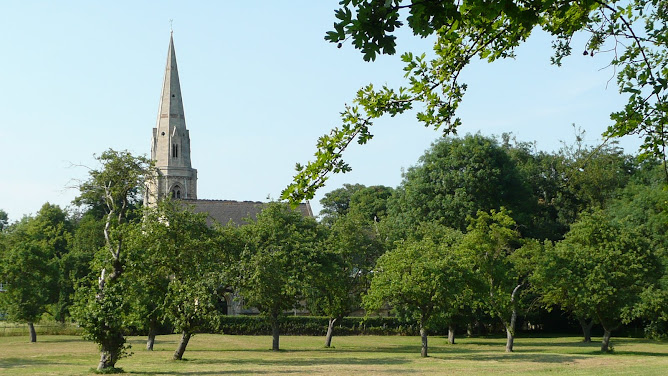
Showing posts with label Bardney. Show all posts
Showing posts with label Bardney. Show all posts
Monday, 14 July 2014


Friday, 4 July 2014
Wind Farm
Series of Meetings
I have been asked if I would publish this leaflet again as a reminder of the meetings that are to take place over the next week or so:

I have been asked if I would publish this leaflet again as a reminder of the meetings that are to take place over the next week or so:
Relying on renewables need not mean dealing with blackouts
'Just small fluctuations in an electric current can wreak serious damage. Fortunately, the means of generating electricity provides its own protection against this. Unfortunately, the renewable energy technology we will use now and for the future removes this protection – with potentially disastrous results.'
http://theconversation.com/relying-on-renewables-need-not-mean-dealing-with-blackouts-28635
Small nuclear reactors may be the key to a low-carbon future
'Could wind replace coal? The government has an ambitious programme for expanding domestic offshore wind, with the recently commissioned London Array off the East Anglian coast currently producing a world-leading 650MW. But as UK electricity demand ranges from 38-58GW, the energy generated by the London Array and other wind farms is a mere drop in the ocean of what will be required.'
http://theconversation.com/small-nuclear-reactors-may-be-the-key-to-a-low-carbon-future-28994
Small nuclear reactors may be the key to a low-carbon future
'Could wind replace coal? The government has an ambitious programme for expanding domestic offshore wind, with the recently commissioned London Array off the East Anglian coast currently producing a world-leading 650MW. But as UK electricity demand ranges from 38-58GW, the energy generated by the London Array and other wind farms is a mere drop in the ocean of what will be required.'
http://theconversation.com/small-nuclear-reactors-may-be-the-key-to-a-low-carbon-future-28994
Monday, 23 June 2014
Wind Farm
Vattenfall Information Session
The sessions opened in Bardney on Thursday 19 June and it appears this was very well attended. My wife and I visited the Nocton event on the Friday and this too was well supported. The following were some of the handouts available:
2. The current proposal - landscape and visual
3. Transport, grid connection and other infrastructure
4. Noise
5. Heritage, archaeology and ground conditions
6. Ecology and wildlife
7. Community investment
You will see from the documentation that photomontages and a 3D computer-generated model were also available to view. There were various Ordnance Survey printouts to study as well e.g. highlighting potential Grid Connections; showing various routes in/out of site for transportation of equipment; detailing Areas of Special Interest in the local area; identifying potential viewing impact of the blade height on the surrounding area of Lincolnshire [N.B. the maps have not been scanned for the blog because of potential copyright constraints].
Unfortunately, there were no copies of the photomontages to take away, nor of the 3D computer-generated images. However, a Vattenfall representative did assure me that I would be given access to the material for publishing once all sessions have been completed - this may be via a link to their website though.]
We were pleased to see that some of the earlier feedback had been taken on board. For example, it has already been decided that an underground connection to the grid at Nocton Heath will be adopted, although the exact route has yet to be determined.
I think it is crucial that all visitors to the Information Sessions take the time and trouble to complete feedback sheets and to engage with the process. It is possible these will have some bearing on how the plans materialise over the coming months.
The sessions opened in Bardney on Thursday 19 June and it appears this was very well attended. My wife and I visited the Nocton event on the Friday and this too was well supported. The following were some of the handouts available:
 |
| Handout 1 |
2. The current proposal - landscape and visual
3. Transport, grid connection and other infrastructure
4. Noise
5. Heritage, archaeology and ground conditions
6. Ecology and wildlife
7. Community investment
 |
| Handout 8 |
You will see from the documentation that photomontages and a 3D computer-generated model were also available to view. There were various Ordnance Survey printouts to study as well e.g. highlighting potential Grid Connections; showing various routes in/out of site for transportation of equipment; detailing Areas of Special Interest in the local area; identifying potential viewing impact of the blade height on the surrounding area of Lincolnshire [N.B. the maps have not been scanned for the blog because of potential copyright constraints].
Unfortunately, there were no copies of the photomontages to take away, nor of the 3D computer-generated images. However, a Vattenfall representative did assure me that I would be given access to the material for publishing once all sessions have been completed - this may be via a link to their website though.]
We were pleased to see that some of the earlier feedback had been taken on board. For example, it has already been decided that an underground connection to the grid at Nocton Heath will be adopted, although the exact route has yet to be determined.
I think it is crucial that all visitors to the Information Sessions take the time and trouble to complete feedback sheets and to engage with the process. It is possible these will have some bearing on how the plans materialise over the coming months.
Thursday, 19 June 2014
Wind Farm
Planning ahead on turbine scheme
This extract originates from the local newspaper newsnk - Summer 2014:
"The Council will be working to ensure a high degree of community engagement as plans emerge for a potential windfarm application at Nocton Fen.
Although there is no application yet made and Vattenfall, the firm proposing 23 turbines on 9 sq km of land between Metheringham and Bardney, is still investigating its technical feasibility, it has to engage and consult widely at an early stage.
If it does become a formal proposal, as a nationally significant infrastructure project, NKDC could only comment - not determine it. The Council's part in the process is key however. It has a number of roles and responsibilities under the requirements placed on it as a so-called host authority to the probable project.
As part of its pre-application process Vattenfall has begun its initial consultation locally and started to talk to key stakeholders including giving a briefing to all NKDC members. This stage is likely to last until late 2015, during which time NKDC has to work closely with Vattenfall to ensure communities are properly and fully engaged and their views properly addressed; to agree methodology for technical surveys; agree a consultation report; produce local impact report; and agree grounds of consent and disagreement.
Vattenfal has already stated that it expects to submit a project with 150m high turbines - the country's largest - to generate enough electricity to power 47,000 homes; equivalent to every home in North Kesteven.
Cllr Mike Gallagher, Executive Board member with responsibility for planning, said: 'There will be a long and varied programme of consultations on this scheme before it even reaches the stage of being an application. If it does become a formal application for development consent that would be submitted to the planning inspectorate and brought to our planning committee to comment on only."
Note
A pre-application forum was held in NKDC’s Council Chamber on April 29 2014.
The pre-application presentation was given by Vattenfall Wind Power Ltd, relating to the land at Nocton Fen. If they proceed to make a formal application, because it would be classed as a Nationally Significant Infrastructure Project (NSIP) for the development of a wind farm, it would be submitted to the Planning Inspectorate – not NKDC. NKDC would only comment on it, and not determine it.
The Planning Inspectorate would examine the application and make a recommendation to the Secretary of State who would determine the application under the provisions of the Planning Act 2008.
NKDC encourages pre-application discussions with developers who are considering proposals for major / significant / innovative schemes within the District.
This extract originates from the local newspaper newsnk - Summer 2014:
"The Council will be working to ensure a high degree of community engagement as plans emerge for a potential windfarm application at Nocton Fen.
Although there is no application yet made and Vattenfall, the firm proposing 23 turbines on 9 sq km of land between Metheringham and Bardney, is still investigating its technical feasibility, it has to engage and consult widely at an early stage.
If it does become a formal proposal, as a nationally significant infrastructure project, NKDC could only comment - not determine it. The Council's part in the process is key however. It has a number of roles and responsibilities under the requirements placed on it as a so-called host authority to the probable project.
As part of its pre-application process Vattenfall has begun its initial consultation locally and started to talk to key stakeholders including giving a briefing to all NKDC members. This stage is likely to last until late 2015, during which time NKDC has to work closely with Vattenfall to ensure communities are properly and fully engaged and their views properly addressed; to agree methodology for technical surveys; agree a consultation report; produce local impact report; and agree grounds of consent and disagreement.
Vattenfal has already stated that it expects to submit a project with 150m high turbines - the country's largest - to generate enough electricity to power 47,000 homes; equivalent to every home in North Kesteven.
Cllr Mike Gallagher, Executive Board member with responsibility for planning, said: 'There will be a long and varied programme of consultations on this scheme before it even reaches the stage of being an application. If it does become a formal application for development consent that would be submitted to the planning inspectorate and brought to our planning committee to comment on only."
Note
A pre-application forum was held in NKDC’s Council Chamber on April 29 2014.
The pre-application presentation was given by Vattenfall Wind Power Ltd, relating to the land at Nocton Fen. If they proceed to make a formal application, because it would be classed as a Nationally Significant Infrastructure Project (NSIP) for the development of a wind farm, it would be submitted to the Planning Inspectorate – not NKDC. NKDC would only comment on it, and not determine it.
The Planning Inspectorate would examine the application and make a recommendation to the Secretary of State who would determine the application under the provisions of the Planning Act 2008.
NKDC encourages pre-application discussions with developers who are considering proposals for major / significant / innovative schemes within the District.
Tuesday, 17 June 2014
Wind Farm
Nocton Fen - Exploring the Wind Energy Potential
The following newsletter arrived yesterday in my Inbox:
"E-newsletter 6

Reminder: Information sessions start this week
Information sessions will be held this week and next week as follows:
- Thurs 19 June: Bardney Village Hall 2pm-7pm
- Fri 20 June: Nocton Village Hall 2pm-8pm
- Sat 21 June: Branston Village Hall 10am-4pm
- Thurs 26 June: Metheringham Village Hall 2pm-7.30pm
- Fri 27 June: Dunston Village Hall 2pm-8pm
- Sat 28 June: Potterhanworth Memorial Hall 10am-4pm
Get others involved
We want to keep as many people as informed as possible as the project progresses. Please encourage others to sign up to receive e-newsletter updates like this one here.
Vattenfall in the UK
To find out more about us and some of our other projects in the UK visit: www.penycymoeddwindfarm.info and http://swinfordwindfarm.vattenfall.co.uk"
The following newsletter arrived yesterday in my Inbox:
"E-newsletter 6
Reminder: Information sessions start this week
Information sessions will be held this week and next week as follows:
- Thurs 19 June: Bardney Village Hall 2pm-7pm
- Fri 20 June: Nocton Village Hall 2pm-8pm
- Sat 21 June: Branston Village Hall 10am-4pm
- Thurs 26 June: Metheringham Village Hall 2pm-7.30pm
- Fri 27 June: Dunston Village Hall 2pm-8pm
- Sat 28 June: Potterhanworth Memorial Hall 10am-4pm
Get others involved
We want to keep as many people as informed as possible as the project progresses. Please encourage others to sign up to receive e-newsletter updates like this one here.
Vattenfall in the UK
To find out more about us and some of our other projects in the UK visit: www.penycymoeddwindfarm.info and http://swinfordwindfarm.vattenfall.co.uk"
Tuesday, 10 June 2014
Wind Farm
Protect Nocton Fen
CAR STICKERS AND POSTERS
Now available!
Car Stickers are now available from the following locations:
Bardney - Contact Diane Easton Tel: 01526 397640 or collect from Bardney Heritage Centre
Nocton - Post Office (Monday, Tuesday and Thursday 9am-2pm, Friday 9am -1pm)
Dunston - Contact Peter Emery Tel: 01526 322195 or collect from The Hub, Dunston Village Hall (second Thursday in the month 2-4pm)
Metheringham - Star and Garter Public House and Emily’s Tanning & Beauty, 18 High Street, Metheringham
Potterhanworth - Chequers Public House
“To help fund the cost of paper and printing we are asking for a voluntary donation of 50 pence for each car sticker”
Posters for display on private property in gardens or windows can be obtained from:
Bardney and Southrey – Contact Diane Easton Tel: 01526 397640
Nocton, Dunston, Potterhanworth and Metheringham – Contact Jane Tel: 01526 321723
“Please note: We have been having problems with posters being taken down by unknown persons when displayed on private property. It is important to display as many posters as possible during the Vattenfall Information sessions and during the PNF Public Meetings ie Wedneday 18th June to Tuesday 15th July and then take down and keep for future use”
www.protectnoctonfen.org.uk
email: protectnoctonfen@hotmail.com

CAR STICKERS AND POSTERS
Now available!
Car Stickers are now available from the following locations:
Bardney - Contact Diane Easton Tel: 01526 397640 or collect from Bardney Heritage Centre
Nocton - Post Office (Monday, Tuesday and Thursday 9am-2pm, Friday 9am -1pm)
Dunston - Contact Peter Emery Tel: 01526 322195 or collect from The Hub, Dunston Village Hall (second Thursday in the month 2-4pm)
Metheringham - Star and Garter Public House and Emily’s Tanning & Beauty, 18 High Street, Metheringham
Potterhanworth - Chequers Public House
“To help fund the cost of paper and printing we are asking for a voluntary donation of 50 pence for each car sticker”
Posters for display on private property in gardens or windows can be obtained from:
Bardney and Southrey – Contact Diane Easton Tel: 01526 397640
Nocton, Dunston, Potterhanworth and Metheringham – Contact Jane Tel: 01526 321723
“Please note: We have been having problems with posters being taken down by unknown persons when displayed on private property. It is important to display as many posters as possible during the Vattenfall Information sessions and during the PNF Public Meetings ie Wedneday 18th June to Tuesday 15th July and then take down and keep for future use”
www.protectnoctonfen.org.uk
email: protectnoctonfen@hotmail.com
Wednesday, 4 June 2014


Friday, 9 May 2014
Wind Farm
Vattenfall News
I received this e-newsletter earlier today:
Nocton Fen - Exploring the Wind Energy Potential - E-newsletter 5
Information sessions in June
Last chance to register for the visit to Swinford Wind Farm
At the visit you will also get the chance to speak with local people from the neighbouring communities about their experiences through development, construction and operation of the wind farm.
An update from Graham the Project Manager
We also gave a presentation recently to North Kesteven District Council. You can see the presentation we gave here under 'more information'. We hope you found the last fact sheets useful. More will be available soon.
Get others involved
Vattenfall Wind Power Ltd, Abbey Warehouse, Abbey Slip, Penzance, TR18 4AR
Wind Farm issues in the news recently
Wind Farms Severely Harmful to Wildlife, New Study Finds
'A new study from the Swedish University of Agricultural Sciences, combining an impressive six hundred other studies, describes the severe effects wind turbines can have on wildlife.'
http://www.breitbart.com/Breitbart-London/2014/05/08/Wind-Farms-Severely-Harmful-to-Wildlife-New-Study-Finds
The beauty of windfarms – in pictures
'Though Australia's treasurer, Joe Hockey, says wind turbines are 'utterly offensive' and a 'blight on the landscape', the towering masts with their slowly turning blades can inspire awe. Here is a roundup of images from around the world celebrating the windfarms that help to power our way of life '
http://www.theguardian.com/environment/gallery/2014/may/02/the-beauty-of-windfarms-in-pictures
UK 'has already approved enough green energy to hit targets’
'Wind, solar, biomass and other renewable energy projects that are built or have planning consent will be enough to meet EU targets, report claims.'
http://www.telegraph.co.uk/finance/newsbysector/energy/10797041/UK-has-already-approved-enough-green-energy-to-hit-targets.html
Analysis of Operating Wind Farms 2014
The second EWEA technology workshops on the analysis of operating wind farms - 9-10 December 2014, Malmö, Sweden. To be kept informed about workshop developments please fill-in the following form:
http://www.ewea.org/events/workshops/operational-assessment-2014/
I received this e-newsletter earlier today:
Nocton Fen - Exploring the Wind Energy Potential - E-newsletter 5
Information sessions in June
We will hold the next round of information sessions towards the end of June as follows:
- Thurs 19 June: Bardney Village Hall [2pm-7pm]
- Fri 20 June: Nocton Village Hall [2pm-8pm]
- Sat 21 June: Branston Village Hall [10am-4pm]
- Thurs 26 June: Metheringham Village Hall [2pm-7.30pm]
- Fri 27 June: Dunston Village Hall [2pm-8pm]
- Sat 28 June: Potterhanworth Memorial Hall [10am-4pm]
Last chance to register for the visit to Swinford Wind Farm
This is your last chance to register for the visit to Swinford Wind Farm in Leicestershire on 17th May, please RSVP here. There were many requests at the last information sessions for the chance to visit a wind farm and understand some of the key issues.
An update from Graham the Project Manager
We have had a busy few months and are continuing our pre-assessment work onsite, including noise and wind resource monitoring, ecology and ornithology.
Get others involved
We want to keep as many people as informed as possible as the project progresses. Please encourage others to sign up to receive e-newsletter updates like this one here.
Vattenfall in the UK
To find out more about us and some of our other projects in the UK visit: www.penycymoeddwindfarm.info and http://swinfordwindfarm.vattenfall.co.uk.
You are receiving this newsletter as you have registered your interest in Nocton Fen. To unsubscribe email us.
Wind Farms Severely Harmful to Wildlife, New Study Finds
'A new study from the Swedish University of Agricultural Sciences, combining an impressive six hundred other studies, describes the severe effects wind turbines can have on wildlife.'
http://www.breitbart.com/Breitbart-London/2014/05/08/Wind-Farms-Severely-Harmful-to-Wildlife-New-Study-Finds
The beauty of windfarms – in pictures
'Though Australia's treasurer, Joe Hockey, says wind turbines are 'utterly offensive' and a 'blight on the landscape', the towering masts with their slowly turning blades can inspire awe. Here is a roundup of images from around the world celebrating the windfarms that help to power our way of life '
http://www.theguardian.com/environment/gallery/2014/may/02/the-beauty-of-windfarms-in-pictures
UK 'has already approved enough green energy to hit targets’
'Wind, solar, biomass and other renewable energy projects that are built or have planning consent will be enough to meet EU targets, report claims.'
http://www.telegraph.co.uk/finance/newsbysector/energy/10797041/UK-has-already-approved-enough-green-energy-to-hit-targets.html
Analysis of Operating Wind Farms 2014
The second EWEA technology workshops on the analysis of operating wind farms - 9-10 December 2014, Malmö, Sweden. To be kept informed about workshop developments please fill-in the following form:
http://www.ewea.org/events/workshops/operational-assessment-2014/
Tuesday, 5 November 2013
Parish Council Meeting
Presentation by Vattenfall representative
These are my personal notes from the meeting. If I have interpreted anything incorrectly, please do leave comments below so that amendments can be registered.
Introduction by Vice Chair [Parish Council]
This is the start of a very long process. Nocton Parish Council will be working with Dunston, Potterhanworth and possibly Bardney Parish Councils in view of the location of the proposed wind farm. Additional public meetings shall be arranged as necessary.
Vattenfall
The company have 'an option' to develop a wind farm on Nocton Fen. There will be a full consultation exercise to identify all concerns and opportunities arising from the project. Studies will be undertaken to assess the visual impact, any impact from noise and the socio-economic impacts. This will feed in to an Environmental Impact Assessment Scoping document. It is hoped that everyone 'gets involved' with the consultation process.
The company were aware of the previous plans by Renewable Energy Systems Ltd, but technology has changed so there is the opportunity to look at this site again. Precise details of construction are still unavailable as it is very early in the project timeline e.g. whether pylons would be necessary to link the sub-station to the grid; logistics of construction (it appears a 'swept path analysis' has already been carried out to identify whether the road network is suitable).
Please see the enclosed extracts from a Stakeholder Briefing Note which gives more detail of the timelines of the project.
Beeswax Farming
The company bought the land knowing there was the option to develop a wind farm on Nocton Fen. Indeed, the farm couldn't be bought with the option excluded... it was part of the sales agreement. Beeswax are neutral over onshore wind and as the land was bought for farming, they do not intend to make any financial gain from the project. Any gain as a landowner will pass to the community, adding to any community fund from Vattenfall. Beeswax want to ensure that all consultation processes with the community are robust.
Dyson Family
Also take a neutral approach about onshore wind energy. Again there was a wish to ensure that the community are properly consulted during the process to assess the site suitability.
District Councillor
Expressed disappointment that Vattenfall hadn't approached the Council before meeting with the local community. It transpires that in 2010 each County were given a percentage of renewable energy to achieve [by the Government?]. Lincolnshire have more than achieved their target for renewables, via windfarm developments and 'energy from waste' plants etc.
In view of the potential size of the Vattenfall project, it was thought that any plans will end up with the Secretary of State for consideration, rather than at a local County or District planning level (although they will be invited to contribute as statutory consultees).
East Heckington
This project was mentioned by the District Councillor. You may like to study the Inspector's Report to the Secretary of State which makes interesting reading.
These are my personal notes from the meeting. If I have interpreted anything incorrectly, please do leave comments below so that amendments can be registered.
Introduction by Vice Chair [Parish Council]
This is the start of a very long process. Nocton Parish Council will be working with Dunston, Potterhanworth and possibly Bardney Parish Councils in view of the location of the proposed wind farm. Additional public meetings shall be arranged as necessary.
Vattenfall
The company have 'an option' to develop a wind farm on Nocton Fen. There will be a full consultation exercise to identify all concerns and opportunities arising from the project. Studies will be undertaken to assess the visual impact, any impact from noise and the socio-economic impacts. This will feed in to an Environmental Impact Assessment Scoping document. It is hoped that everyone 'gets involved' with the consultation process.
The company were aware of the previous plans by Renewable Energy Systems Ltd, but technology has changed so there is the opportunity to look at this site again. Precise details of construction are still unavailable as it is very early in the project timeline e.g. whether pylons would be necessary to link the sub-station to the grid; logistics of construction (it appears a 'swept path analysis' has already been carried out to identify whether the road network is suitable).
Please see the enclosed extracts from a Stakeholder Briefing Note which gives more detail of the timelines of the project.
Beeswax Farming
The company bought the land knowing there was the option to develop a wind farm on Nocton Fen. Indeed, the farm couldn't be bought with the option excluded... it was part of the sales agreement. Beeswax are neutral over onshore wind and as the land was bought for farming, they do not intend to make any financial gain from the project. Any gain as a landowner will pass to the community, adding to any community fund from Vattenfall. Beeswax want to ensure that all consultation processes with the community are robust.
Dyson Family
Also take a neutral approach about onshore wind energy. Again there was a wish to ensure that the community are properly consulted during the process to assess the site suitability.
District Councillor
Expressed disappointment that Vattenfall hadn't approached the Council before meeting with the local community. It transpires that in 2010 each County were given a percentage of renewable energy to achieve [by the Government?]. Lincolnshire have more than achieved their target for renewables, via windfarm developments and 'energy from waste' plants etc.
In view of the potential size of the Vattenfall project, it was thought that any plans will end up with the Secretary of State for consideration, rather than at a local County or District planning level (although they will be invited to contribute as statutory consultees).
East Heckington
This project was mentioned by the District Councillor. You may like to study the Inspector's Report to the Secretary of State which makes interesting reading.
Sunday, 3 November 2013
Wind Farm
Meetings
The following leaflet dropped through my letterbox yesterday. I suspect these were widely dispersed throughout the village, so you may already have a personal copy.
Is this the precursor of yet another campaign for Nocton and surrounding villages?

The following leaflet dropped through my letterbox yesterday. I suspect these were widely dispersed throughout the village, so you may already have a personal copy.
Is this the precursor of yet another campaign for Nocton and surrounding villages?

Public views sought on 23-turbine wind farm near Lincoln
'People are being given the chance to tell a developer what they think of an idea to build up to 23 wind turbines at Nocton Fen.'
Tuesday, 18 October 2011
Heavy Goods Vehicles
British Sugar
There seems to have been a rise in heavy goods vehicles using the village of late, many of which are tankers from British Sugar. There are also other tankers (WG Tanker Hire - http://www.wgtanker.com/hiretankers.html) which may also be contracted by British Sugar and delivering to the depot at Bardney.
I seem to remember in previous years, we encountered a similar increase in heavy traffic at this time of year... and can only assume it is to do with the beet harvest and subsequent sugar production at Newark. I think this was raised with the British Sugar Bardney depot a couple of years ago and we were told the old sugar beet factory is now used for storage and repacking of product, hence the requirement for tanker deliveries of sugar.
Branston Potatoes
We also seem to be having a few more of these heavy goods vehicles as well, although the reason for this is less clear. One can only assume they are coming through from the A158 at Wragby to get to the depot at Branston.
Rase Distribution
Heavy goods vehicles from this company also use this route to and from their Bardney depot, but generally these appear quite randomly rather than in a compressed period, such as the British Sugar tankers.
Construction Traffic
There have also been a number of vehicles supplying materials for the new anaerobic digester site at Wasp's Nest. However, as the construction of this site appears to be nearing completion, the heavy goods traffic may cease before too long.
Speed
Whilst the local firms who use the route all year round are sensitive (in the main) to the village, by keeping the speed down and negotiating the 90 degree bends with due care, the same can't be said for the contract drivers of some other heavy vehicles. With many of the local children and parents navigating the narrow pavements to attend school, it can be quite nerve-racking when these juggernauts pass by with little room to spare.
Perhaps this should be raised with the Parish Council in order that a timely reminder can be considered for all Transport Managers?
_________________________________________________________
There seems to have been a rise in heavy goods vehicles using the village of late, many of which are tankers from British Sugar. There are also other tankers (WG Tanker Hire - http://www.wgtanker.com/hiretankers.html) which may also be contracted by British Sugar and delivering to the depot at Bardney.
I seem to remember in previous years, we encountered a similar increase in heavy traffic at this time of year... and can only assume it is to do with the beet harvest and subsequent sugar production at Newark. I think this was raised with the British Sugar Bardney depot a couple of years ago and we were told the old sugar beet factory is now used for storage and repacking of product, hence the requirement for tanker deliveries of sugar.
Branston Potatoes
We also seem to be having a few more of these heavy goods vehicles as well, although the reason for this is less clear. One can only assume they are coming through from the A158 at Wragby to get to the depot at Branston.
Rase Distribution
Heavy goods vehicles from this company also use this route to and from their Bardney depot, but generally these appear quite randomly rather than in a compressed period, such as the British Sugar tankers.
Construction Traffic
There have also been a number of vehicles supplying materials for the new anaerobic digester site at Wasp's Nest. However, as the construction of this site appears to be nearing completion, the heavy goods traffic may cease before too long.
Speed
Whilst the local firms who use the route all year round are sensitive (in the main) to the village, by keeping the speed down and negotiating the 90 degree bends with due care, the same can't be said for the contract drivers of some other heavy vehicles. With many of the local children and parents navigating the narrow pavements to attend school, it can be quite nerve-racking when these juggernauts pass by with little room to spare.
Perhaps this should be raised with the Parish Council in order that a timely reminder can be considered for all Transport Managers?
_________________________________________________________
Thursday, 22 September 2011
Bardney Sugar Factory
Bardney sugar factory to be demolished amid rising safety fears
'DERELICT sugar factory buildings are to be almost completely demolished for safety reasons, ten years after they ceased production.'
http://www.thisislincolnshire.co.uk/Bardney-sugar-factory-demolished-amid-rising/story-13349381-detail/story.html
The History of Bardney Sugar Factory
'This website celebrates 74 years of sugar beet processing and sugar manufacturing at Bardeny Factory.'
http://community.lincolnshire.gov.uk/thehistoryofbardneysugarfactory/index.asp
Bardney Village History
http://community.lincolnshire.gov.uk/bardneyvillagehistory/index.asp?catId=22768
Bardney
http://en.wikipedia.org/wiki/Bardney
______________________________________________________
'DERELICT sugar factory buildings are to be almost completely demolished for safety reasons, ten years after they ceased production.'
http://www.thisislincolnshire.co.uk/Bardney-sugar-factory-demolished-amid-rising/story-13349381-detail/story.html
The History of Bardney Sugar Factory
'This website celebrates 74 years of sugar beet processing and sugar manufacturing at Bardeny Factory.'
http://community.lincolnshire.gov.uk/thehistoryofbardneysugarfactory/index.asp
Bardney Village History
http://community.lincolnshire.gov.uk/bardneyvillagehistory/index.asp?catId=22768
Bardney
http://en.wikipedia.org/wiki/Bardney
______________________________________________________
Saturday, 10 September 2011
Nocton Hall - Revelations of an Imp - Chapter 5
The last days of Nocton Priory
By 1535, King Henry's bank statement showed he was deeply in debt. This situation called for drastic measures to put his Royal account into credit. On the advice of those who kept the money supply topped up, it was suggested that the Religious Houses throughout his realm, might provide a flush of funds to meet the Court's expenditure. An order was issued that any Monastery with an income of less than £200 per annum, should be closed and both buildings and land transferred to the Crown. Nocton Priory, even after Sir Nicholas Wymbishe's skill in stabilizing their financial position, fell far short of the Royal limit. Young Sir Thomas Wymbishe shared the deep feelings and sadness of the Prior and Canons. There was no way to save their Religious House, established over 400 years through the original generosity of Robert D'Arcy. It had become complimentary to Nocton Hall. Its way of life harmonised with the village and above all, the quality of the honey, for its medicinal value, was the envy of the Lincolnshire countryside.
Sir Thomas, acting in a most vigorous manner, did what he could and although after his death he was criticised as a 'big spender', no one gave credit for the young man's generosity and help in acquiring a 'golden handshake' for the Prior, and others of their religious order, living at the Priory on the 'day of doom'.
The fortunate gentleman, to receive the gift of the Priory and 300 acres estate, was none other than Charles Brandon, Duke of Suffolk. He lived a further 10 years as the proud owner of this small and re-styled ducal establishment. In accordance with the King's wish, any building suitable for worship, was destroyed, but Charles Brandon, with the persuasion of his fourth wife, Katherine Willoughby, converted what remained of the Priory into a comfortable home, well sheltered with fine trees and giving the house an open view across the Roman Car Dyke to Nocton Fen, in the direction of Bardney.
It is possible that both the Duke's sons, Henry and Charles were born in his Nocton home, but during their education at St. John's College, Cambridge, the two brothers became seriously ill and were taken to the Bishop of Lincoln's home at Buckden in Huntingdonshire where they died (Mary, the former wife of Charles Brandon was the King's sister and widow of the King of France).
________________________________________________________________________________
Friday, 29 April 2011
British Sugar
We often see the HGV tankers navigating our narrow village roads on their way out to Bardney, so these articles may be of interest.
British Sugar suffers £20m loss
'BRITISH Sugar has suffered losses of around £20 million, according to a trading statement from parent company Associated British Foods.'
http://www.farmersguardian.com/home/arable/british-sugar-suffers-£20m-loss/37516.article
British Sugar drawn into ethanol plant dispute
'BRITISH Sugar has become drawn into an increasingly bitter labour dispute over the construction of a £200m bioethanol plant, near Hull.'
http://www.farmersguardian.com/home/latest-news/british-sugar-drawn-into-ethanol-plant-dispute/38609.article
_______________________________________________________
British Sugar suffers £20m loss
'BRITISH Sugar has suffered losses of around £20 million, according to a trading statement from parent company Associated British Foods.'
http://www.farmersguardian.com/home/arable/british-sugar-suffers-£20m-loss/37516.article
British Sugar drawn into ethanol plant dispute
'BRITISH Sugar has become drawn into an increasingly bitter labour dispute over the construction of a £200m bioethanol plant, near Hull.'
http://www.farmersguardian.com/home/latest-news/british-sugar-drawn-into-ethanol-plant-dispute/38609.article
_______________________________________________________
Wednesday, 30 May 2007
Personal Stories (Part 2)
From Horses to Computers – In 50 years, What Next?
by Mr Len Woodhead (Employed as a Foreman for Nocton Farms)
“I was born at Todd’s Farm, Nocton Fen (TD8) in 1937. At that time there were two cottages in the corner of the field which is now known as TD8. My father had come into Nocton Fen at the age of 18 as a second chap (2nd Waggoner) to a chap called George Reeve (later we saw his name on lorries).
This was at the Partridge Farm where he lodged until he married. There were eight horses at the Partridge. George looked after and worked four, and father the other four. At the time Dennis’s owned the estate.
The job was a seven day one, up at 5.30am to fetch in the horses and give them food ready for work by 6.30am. Sunday of course, was not worked, other than stable work unless it was a difficult harvest. The days in the fields working the horses would start at 6.30am with a half-hour break at 11.00am. Work would continue until 2.30pm (called Lowsing Time) when the horses would be brought back home. They would be groomed, fed and the stables cleaned out. The crew yards would be bedded with clean straw and only then would the Waggoners go in for dinner.
At about 5.30pm father would then come out again and ‘supper up’ (or feed) the horses. In the Summer he would be taking them into a grass field for the night – in the Winter they would stay in the Crew Yard.
In March 1932 Dad met and married my Mum and they moved to Todd’s. There he looked after and worked four horses, Bonnie, Captain, Star and Daisy. He used to do most of the drilling and potato ridging down on that section of the Fen and although he only had one eye he could plough and ridge or drill as straight as anybody.
I have the furniture bill from when they were married and it goes like this:
· Bedroom suite £10
· Settee suite £10.5s
· 4 rugs @3/6d each = 14s.0ds
· Table £2.2s
· 4 leather chairs @ 7/6d = £1.10s
· Armchair £1.2s.6d
· 1 ladies cane chair £1.2s.6d
· Oak sideboard £4.10s
· Mirror 5/11d
· Wringer £2
· Dolly Tub 5/11d
· Pegs 3/6d
· Clothes basket 2/6d
· Fire Kerb 12/6d
· Cloth horse 16/-
· 2 bedsteads @ £1.16s = £3.12s
· 2 spring mattresses @ £1.15s = £3.10s
· 2 wool mattresses @ £1.15s =£3.10s
· 2 feather beds @ 1/1d = £2.2s.0d
Total £49.1s.3d (all from Neale Bros in, High St, Lincoln).
The 3,000 acres in Nocton Fen was then in four sections, which each had a Foreman and about 40 permanent staff, plus about sixteen Irish labourers in season for hoeing/lifting and topping beet, picking potatoes and bringing in the harvest. Labourer’s wives would make up a potato picking gang during August and September.
The men on the lower part of the Fen mostly came from Bardney or over the Ferry from Southrey. At that time there were 28 houses inhabited in Nocton Fen, but they were occupied by Waggoners, Foremen and Stockmen etc. There were two blacksmith’s shops in the Fen – one near the Cathole Bridge, Todd’s Road and one at Lark Farm.
Apart from horses, of which there were between 70 and 80 in the Fen, there were also two sets of Ruston Ploughing engines or cultivators, and of course the Light Railway which joined all the farm yards from the rail head at Dunston to all parts of the estate.
The farm roads were only dirt roads so everything was moved by rail. No water was laid on, so all drinking and washing water was brought by rail – each house had old water tanks by the side of the railway line, with a piece of zinc covering them to keep out birds and soil.
Rations for the horses, pigs and beast were all brought by rail. Coal for the steam engines and Irishman’s fires were also brought by rail. Produce (potatoes, corn and peas) were taken by rail to Dunston. Sugar beet was also hauled by rail (Bardney factory was built in 1928), but it was taken down the Fen and emptied with forks into a pit on the Fen side of the river. The large iron bridge which you can still see today, carried a grab which carried the beet over the river and dropped it into railway trucks, where it was shunted around to the east side of the factory, before being emptied by forks again.
If you needed the Doctor he would bike from Bardney and leave his bike near the Fen road, put on his wellies and walk down to the farm yards. The houses were in fair condition, a coal fire in every room. The toilet was down the bottom of the garden, sometimes with two seats so you wouldn’t be lonely or frightened. You could take a candle with you and read the latest news on the toilet paper (Lincolnshire Chronicle).
Mum would have a large old wash-house with a steel copper, which of course was heated with coal. Out in the farm-yard would be ducks, cockerils and hens, a couple of pigs in the sty at the bottom of the garden and a few rabbits as well, so you didn’t need the butcher.
The butcher would come around, once in December and once in January to kill the pigs. That was always a busy day, up at 5.00am to get the copper going, as it had to be full of scalding hot water by 8am. The butcher would kill the pig after which we placed it on the cratch (a two wheeled trolley).
Scalding water would be thrown over the pig until the whiskers came off easily with scrapers. When that was done, the pig would be hung up in a shed or apple tree and cut open. The intestines would be taken out and the pig left to hang for about 4 hours.
The butcher would go into the house for a fried breakfast and to collect his money, and he would go on to the next farm. All in all in a Saturday morning he would probably kill about four pigs and by dinner time he had to start his afternoon visits to cut the pigs up into chines, flitchers and harris etc. These would then be salted, laid out in the floor of the pantry or in a salt box, and left for a month to cure, before being hung up on the kitchen ceiling until you wanted it for joints.
Mum would be busy all week making up fries to take round to friends around the Fen farm-yards and also making sausage, pork pie, brown and haslet, so you could guarantee if was pork for at least three weeks until the pork pies had gone.
We didn’t have a radio or wireless, so by the fireside at night under the paraffin lamp we would play cards, dominoes or help mum cut snips to make the rugs. We always had a dog and at least one cat – there being plenty of rats and mice you needed them around the farm. If it snowed too heavy in the wintertime, mum used to carry water from the delf and boil it for household use, because it didn’t need much snow to stop the Light Railway operating.
Footnote
In 1931, the Estate covered 7,000 acres. This was the time when 26 farms were thrown into one (making Mr JH Dennis’s farming enterprise). 7,000 acres, 7 miles long and three miles wide. 1,500 acres potatoes, 1,000 acres wheat, 500 acres of oats, 500 acres of barley, 280 acres peas. There was also sugar beet, beans and clover. There were 3,000 sheep, 2,000 pigs and 500 head of cattle.
There was 23% more labour employed than when it was previously divided into 26 farms. 10,000 to 15,000 tons of potatoes were produced annually, 50,000 bushels of wheat. As many as 260 tons of potatoes could be loaded per day for Newcastle – Sheffield – Cardiff – London.
Four threshing machines harvested all the peas, wheat and barley. The beet factory was built on part of the Estate, even though it was over the river.
Tuesday, 29 May 2007
Nocton Estate - The Lincolnshire Potato Railways
Nocton Estate Light Railway
This extract has been taken from 'The Lincolnshire Potato Railways' - by Stewart E Squires
Oakwood Press - ISBN 0 85361 352 4
The most prominent potato producer and the greatest user of railway line were W. Dennis and Sons who owned large estates at Nocton (8,000 acres), Deeping St Nicholas (2,000 acres) and Kirton (2,000 acres). W Dennis and Sons established their Nocton Estate in 1919 – the annual production in the 1950’s being some 17,000 tons of food, consisting primarily of potatoes.
The Estate Manager (a Major Webber) inspired the purchase of the narrow gauge line from an Army Surplus Depot in Arras, France. The track had been used as a resupply line during the First World War.

Initially just 4 miles of the one foot eleven and a half inch gauge was established at Nocton... on the heavy fenland east of Wasp's Nest. After 1926, the narrow gauge line was greatly extended in order that it could be connected to the railhead on the Lincoln to Sleaford mainline. The weight of the line at Nocton, because of the intensive use of locomotives, was 20lb per yard.
In the end, the route amounted to almost 23 miles of single track (on the Nocton Estate alone). Eventually they were to operate over 30 miles of line in total. Almost every field on the large estates was reached so that produce could be harvested straight onto trucks.
The railhead (located near the old Dunston/Nocton Station) consisted of Estate workshops, a mill, greenhouse and engine shed. There was a 'dock' for offloading produce into lorries or the standard gauge railway waggons (located in a siding - a loop of the Lincoln/Sleaford main line).
At the mill was a large green baize covered board with an Estate field plan and the railway route marked on it. Each field was numbered and each wagon number was attached to a pin. Every wagon movement was noted by a traffic controller.
In 1927 the Bardney Beet Factory was built. Sugar beet from the Nocton Estate was transported to the factory by a mechanical grab running along a gantry over the River Witham, where it was picked up from a dump, from rail trucks dispersing their load.
The Estate's main customer was Smith's Potato Crisps and it was this company that finally bought the land from W. Dennis & Sons in 1936. At its peak, Nocton estate was using 220 working horses, had 1,000 cattle, up to 3,000 pigs and 2,000 sheep (their food was also transported by the narrow gauge railway from the mill).
Tractors were introduced in 1948 (24) and increased in number in 1951 (32). In 1955 the Estate was still producing some 17,000 tons annually - however since World War 2 and the growth of road transport, the rural roads had improved allowing articulated lorries to gain access to each farmstead. By 1960 almost all fields were accessible by road, thius sounding the death knell for the light railway. It was finally closed in July 1969.
The engines and rolling stock from Nocton have survived to this current day and can be seen at the Lincolnshire Coast Light Railway.
All Saints Church, Nocton (Part 1)
Early history
Drafted by Charles Kightly (May 1991) |
All Saints Church, Nocton [South side] - 30 Jun 2009
copyright Geoff Hall
|
A church and a village, however, existed at Nocton many centuries before Victoria's reign. The original settlement may date from Prehistoric or Roman times: for the Roman Carr Dyke (which linked the river Witham to the Welland and formed part of an ancient fen drainage system), cuts through the middle of the parish, dividing Nocton Fen from the higher land on which the village stands. Two dug-out canoes, probably Bronze Age, were discovered when the Dyke was dredged in 1790. Certainly there was an Anglo-Saxon settlement at Nocton, whose name (spelled 'Nochetune' in 1086) may be derived from the Anglo-Saxon words 'hnoc tun', meaning 'village of the wether sheep'. (A wether is a castrated ram, often kept in ancient times as a flock leader).
When Domesday Book was compiled in 1086, Nocton's population numbered some 38 families, and the village already possessed a priest and a church. (No trace of this Saxon church survives, but it probably stood immediately south-west of Nocton Hall). By this time the manor of Nocton belonged to Norman d'Arcy, one of the companions of William the Conqueror: his descendants would continue to own it for nearly another six centuries, until 1660.
Another important influence on the mediaeval village was Nocton Park Priory, founded by Norman's son Robert d'Arcy in the mid-12th century for the 'Black Canons' of the Augustinian order, so called from the colour of their robes. The Priory stood by the Carr Dyke about a mile east of the village, on a site now known as Abbey Hill. Only earthworks now survive there to mark its position, but in the 18th century the foundations of the Priory church and cloister could still be traced. The canons also owned the parish churches of Nocton and Dunston and land in many surrounding villages, but the Priory was never very large or wealthy, being overshadowed by the more important monasteries of Bardney and Kirkstead. Only four canons were still living there when it was finally suppressed in 1536, during the early stages of Henry VIII's Dissolution of the Monasteries.
On the 13th of October 1541 King Henry VIII himself visited Nocton with his flighty fifth wife Katherine Howard, staying overnight with the young squire Thomas Wymbishe on their return from a royal progress through Yorkshire and Lincolnshire. He is said to have planted an ancient chestnut tree in the Hall grounds. (Not long afterwards Queen Katherine lost her head, partly because of her infidelities during this very progress). The manor house where the royal couple stayed has long since disappeared, along with its successor on the site of the Priory, and by the 1670s ownership of Nocton had passed from the descendants of Norman d'Arcy to the Ellys family.
The first of the family to live at Nocton was the Puritan judge and M.P. Sir William Ellys, whose splendid monument (brought from the old church) can still be seen in the tower of All Saints. Though he held high office as solicitor-general to Oliver Cromwell, he afterwards managed to make his peace with Charles II, and died a wealthy old bachelor in 1680, leaving Nocton to his great-nephew Sir William Ellys, baronet (1653-1727). It was this second Sir William who, in about 1690, built 'the magnificent seat of Nocton Hall', on the site of the present Hall. His mansion (later known as 'the Old Hall') burnt down in 1834, but a fragment of its separate banquetting hall (c.1680 ?) still survives, forming the wall of a house about 100 yards north of the church. Old engravings show that the Old Hall was a large E-plan building, with five turrets topped by cupolas.
Later residents of the Old Hall included the rakish Sir Francis Dashwood. second husband of Sir William's daughter-in-law: nationally notorious as the founder of the 'Hellfire Club', Sir Francis was better-known locally as the public-spirited builder of Dunston Pillar, whose remains still stand by the main A15 road some four miles west of Nocton. Originally 92 feet high, equipped with refreshment rooms, and topped by a lantern, it was designed as a 'land-lighthouse' to guide benighted travellers across the highwayman-haunted wilds of Nocton Heath.
The Hobarts
From the Dashwoods, Nocton passed (in about 1767) to the scarcely less flamboyant George Hobart (1731-1804), later (1793) third Earl of Buckinghamshire. A distant cousin of the Ellys family, Hobart was 'exceedingly fond of dramatics, and was for a time a conductor of the operatic entertainments in London': indeed, he celebrated his arrival at Nocton Hall with 'a grand masquerade', and frequently performed plays there in subsequent years. His wife Albinia Bertie of Branston (1738-1816), was a compulsive gambler and devotee of the game of 'faro'. "When she won, she went abroad in her sedan chair, attended by gorgeous lackeys, to scatter largess among the poor': but when she lost, the Nocton estate had to be temporarily mortgaged (1786) to pay her gambling debts.
Perhaps because of such goings-on, the Hobarts thought the ancient parish church of St. Peter 'too inconveniently close to their mansion'. Though they had no legal right to do so, they therefore demolished it in 1773. Only the Ellys monument and a mediaeval font in All Saints' churchyard now survive from the old church, but the site of its churchyard is marked by a rise in the ground south-west of the present Hall, covering the remains of over 20 generations of Nocton parishioners.
To replace it, the Hobarts built an entirely new Georgian church much further from the Hall, on the site of the present church. Later described as 'a small mean structure', it was consecrated in 1775, and old pictures (there is a drawing in All Saints, and a representation in the north-west window of the nave) show that it was built in the currently fashionable Classical style, with a small bell-turret. The interior was filled with unvarnished deal box-pews, and had a raised gallery at the east end.
The third Earl also drastically 'improved' the Nocton estate, draining its fens and enclosing its common land. Most of his time, however, was spent in 'smart London society', his two sons Robert and Henry being left at Nocton in the care of Katherine ('Nanny') Field, the steward's wife. A touching memorial to her can be seen in All Saints' vestry: it was erected by Henry Hobart 'in full recollection of her Kindness, Care and watchful Attention over him during the first ten years of his life'.
This 'Honourable and Very Reverend Henry Hobart' (1774-1846), whose own much more elaborate monument stands near All Saints' entrance door, was the third Earl's younger son. Appointed Vicar of Nocton in 1815, in the following year he also became Dean of Windsor. He was thus in effect a personal chaplain to the Royal Family, and in his later years this 'strange old gentleman' grossly but quite unintentionally offended the young Queen Victoria: for on the birth of her eldest son (the future King Edward VII) he attempted to congratulate her on 'thus saving us from the incredible curse of a female succession'.
Robert Hobart, the Dean's elder brother, succeeded his father as 4th Earl of Buckinghamshire in 1804: his marble monument stands at the west end of All Saints' nave. It records his career as an eminent politician and colonial administrator, and in particular his negotiation of a new charter (depicted on the monument) for the East India Company. He is now much better known, however, for his associations with Hobart, capital of Tasmania, founded during his time as Colonial Secretary and named after him.
In 1810 the 4th Earl renovated Dunston Pillar, replacing its crowning lantern with a colossal statue of King George III: a mason named John Willson fell off the pillar to his death while fixing it in position, and is buried in Harmston churchyard beneath the tombstone epitaph: 'He who erected the noble King, is here now laid by Death's sharp sting'.
King George himself was less than delighted to hear that his statue had been set up in such a desolate spot. 'Ah, Lincolnshire', he remarked in disgust, 'all flats, fogs and fens!'. The statue was removed when Dunston Pillar was shortened by the R.A.F. during the second World War: its head and shoulders can now be seen in the grounds of Lincoln Castle.
'Prosperity Robinson' and Lady Sarah
Earl Robert died in 1816 without male heirs, whereupon his title passed to a nephew. But the Nocton estate passed to his only daughter Lady Sarah Albinia Hobart (1793-1867), who had recently married the Honourable Frederick John Robinson (1782-1859), then M.P. for Ripon, later Viscount Goderich of Nocton (1827), and eventually first Earl of Ripon (1833).
Robinson's career as a politician left something to be desired, 'he being not endowed with either capacity or experience....besides being disqualified for vigorous measures by the remissness and timidity of his character". His failings as Chancellor of the Exchequer (1823-7) gained him the mocking nickname' Prosperity Robinson', and though he managed to remain Prime Minister for five chaotic months between August 1827 and January 1828, he was 'singular among Prime Ministers in being the only one who never faced Parliament in that capacity, his Cabinet having been formed so weakly or managed so clumsily that it fell to pieces before the accustomed time of trial arrived'. In short, he was 'perhaps the weakest Premier to whom a Sovereign of England ever intrusted the seals of office.
All the same, Lord Ripon was respected as 'a fair and candid man', and he and Lady Sarah were certainly good friends to Nocton. The village's present attractive appearance, indeed, is largely due to the generosity of this couple and their son the Marquess of Ripon (1827-1909). Between them they built the Almshouses (1833), the School (1869), and the cottages known as the Old Row (1841), the Ripon Row (1870s) and the Ten Row (1878), all in a distinctive 'Gothic Revival' style.
The Ripons also built the present Nocton Hall, now a Residential Home and hospital. Despite the valiant efforts of a brand-new village fire-engine, Sir William Ellys's Old Hall burnt to the ground on July the 15th, 1834, blazing for nearly fifteen hours. At the 'earnest petition' of the villagers who volunteered to cart building materials at their own expense - its replacement was begun in October 1841, the architect being William Shearburn of Dorking, a Nocton-born 'local boy made good' who was the son of the estate joiner, Joseph Shearburn. Old Joseph himself oversaw the building work, which took ten years and cost between £40,000 and £50,000. Much of the walling stone was quarried nearby on Dunston Heath.
Subscribe to:
Posts (Atom)