Showing posts with label JH Dennis. Show all posts

Tuesday, 9 January 2018

Nocton Hall - grounds and gardens

Nocton Old Hall (- 1834)

Henry VIII, his fifth wife and his Royal party visited Nocton and stayed over night with young Sir Thomas Wymbishe and his attractive wife Lady Elizabeth Tailboys of Kyme. It is said that the large chestnut tree near the North main entrance was planted by Katherine Howard on 13 October 1541 at the behest of Lady Wymbishe and years later the tree was supported by props to stop it collapsing from its own weight.

N.B. As the Horse Chestnut was only introduced to the UK in the late 16th Century, this seems rather unlikely.

Plate 1: Chestnut tree
[photo taken 3 Oct 2011]

In 1672, Sir William Ellys called in the best professional architects and set about adjusting and enlarging his home to become one of the greatest houses in England. On the park wall to the west, opposite the hall, to provide a balanced view he had constructed the face of a Jacobean house into the wall (now known as 'The Pheasantry'). He extended the house through the wall to provide an eating house for travellers who cared to call. There were even tankards of ale, marked 'Nocton Hall' to complement the meals. A large pathway was constructed between the hall and this building to allow his staff to deliver the meals and ale each day without getting wet underfoot.

Plate 2: 'The Pheasantry'
[photo taken 29 May 2010]

It was Sir William Ellys who made substantial alterations to the parkland and estate. Large areas were  planted with oak, ash, lime and good quality hardwoods. This development provided Nocton with a landscape of incredible beauty. Snowdrops, bluebells and lilies of the valley grew in abundance, spreading as each season passed. In May, the scent of the flowers, wafted by a gentle breeze from the woods, gave a satisfaction that made one feel good to be alive. It still does even today.

Plate 3: Snowdrops in profusion
[photo taken 20 Feb 2014]

In mid winter on 29 Dec 1767, the Hobarts entertained at the Hall. Lanterns were festooned from the trees on the drive through the park adding a romantic touch for the arriving guests. It was George Hobart  who conceived the idea of planting a lime avenue to the eastern side of the hall. The trees were double planted and the avenue was about a mile in length towards the horizon. In time, these trees developed a canopy providing a fine feature in the Nocton landscape and Hobart further altered and remodelled the gardens and grounds.

Plate 4: Lime Avenue - east side of Nocton Hall

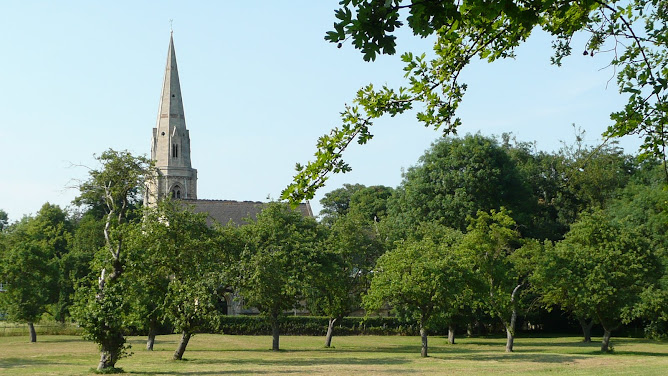
In 1773, St Peter's Church which stood only a few yards from the Hall, was completely demolished and rebuilt on the site of the current All Saints Church. The original graves and headstones are still in situ buried in the raised mound, just south west of the current Nocton Hall.

Plate 5: St. Peter's Church - North view, from a water-colour sketch
by Miss Louisa Charlotte Hobart B: Feb 1826

On 28 April 1827, Frederick John Robinson became Viscount Goderich of Nocton. Frederick and his wife, Lady Sarah Albinia Louisa Hobart, had a devoted love for Nocton which she had inherited on her father's death. There is a charming letter dating from the early years of the Robinsons' possession of Nocton Hall, which conveys the affection they had for the place.

Frederick Robinson writes to his mother on 6 December 1818: "We have certainly been very alert in all our improvements, and notwithstanding the shortness of our stay here, we have contrived to get as many irons into the fire as can well be managed at once ...  Sarah ... is become one of the first rate gardeners; and altho' undoubtedly by no means knowing in the botanical part of that science, she directs the proceedings of the gardener with all the airs of lengthened experience. How far this may result from my having recently become a member of the Horticultural Society, I cannot pretend to say, but the fact is undeniable & excites the utmost astonishment in all her ancient friends."

Concerning the gardens, The Lincoln and Lincolnshire Cabinet criticizes the' infant avenue of elms' in front of the house for being old-fashioned, at a time when axial planning in garden design was anathema. No doubt the elms were planted to replace 'the avenues rooted up' which Torrington had observed in 1791. It is likely that the avenue was replaced by the Robinsons.

[N.B. Lincoln and Lincolnshire Cabinet for 1828, 8. The avenue in question does not appear on an estate plan of 1809, in the possession of Mr Christopher Howard, which was prepared in the time of the Fourth Earl of Buckinghamshire (d.1816). It is not plotted on Greenwood's Map of Lincolnshire of 1830 (based on surveys of l827 to 1828), but it is on Bryant's Map of Lincolnshire of 1825 to 1827]

After the Viscount resigned from office, he was created Earl of Ripon on 13 Apr 1833. Just over a year later, Nocton Old Hall sadly succumbed to fire on 15 Jul 1834 and all that remained was a shell.

Plate 6: Nocton Old Hall (West elevation)
from a drawing by D Jewett


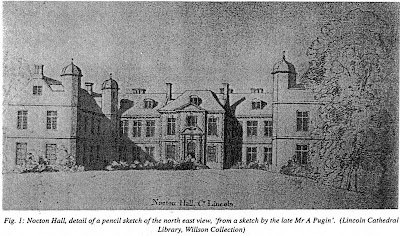
Plate 7: A.W.N. Pugin pencil sketch of the ruins of
Nocton Old Hall, 1834 [Lincoln Cathedral Library, Willson Collection]

The 'new' Nocton Hall (1841 -)

The foundation stone for the current Grade II Listed Nocton Hall was laid on 26 Oct 1841.

Plate 8: Nocton Hall Foundation Stone - laid 26 Oct 1841
[N.B. The inscription is in Latin, but reads in translation:

"This house was founded in about 1530 during the reign of Henry VIII. Enlarged in 1680 by Sir William Ellis. Then George Buckingham finally received it in 1780. Robert Earl of Buckingham's daughter married Frederick John, Earl of Ripon. Fire destroyed the house in about 1830 and another was built in the same place in 1841."]

The architect was a William Shearburn of Dorking (a Nocton born lad) and it was his father, Joseph (a joiner on the estate) who oversaw the building work. It is written that Sir George Gilbert Scott, one of Sarah's close friends, graciously offered his services free and acted as an advisor to William Shearburn. It took ten years to complete.

Not only was a new Hall built, but a new church was constructed - All Saints Church - designed by Sir George Gilbert Scott in the "Gothic Revival" style - after demolishing the second St Peter's Church.

Much of the surrounding woodland was carpeted in snowdrops, wild garlic and daffodils.

It was the first Marquis of Ripon, George Frederick Samuel Robinson, who planted the evenly spaced Wellingtonias  bordering the driveway to Nocton Hall in 1887, just three years after his return from India where he had completed four year as Viceroy.

Plate 9: Wellingtonia - Nocton Hall
[photo from 1998]

It was also in 1887 when the famous West lawn of Nocton Hall (now scrubland with saplings), was used by the Marquis to hold a political meeting attended by over 10,000 of his Liberal supporters from all over Lincolnshire. He gave his speech from the garden steps which gave a suitable elevation for his address.

Plate 10: View of the W elevation showing the garden steps
from where the Marquis addressed his Liberal supporters

In the census for 1891, there is an entry for 'Nocton Hall Gardens' showing that a John Ridsdale was the gardener.

Following the sale of the Hall and estate to George Hodgson (a friend of Ripon), his eldest son John Hodgson came to Nocton Hall in 1895, to assume responsibility. It was John who constructed the extensive lake to the north of the Lime Avenue, to the east of the Hall. It was pump fed from Dunston Beck, thereby making it possible to stock the water with trout.

Plate 11: View of the lake to the E of Nocton Hall

By the time of the census in 1901, there is no mention of John Ridsdale, but a John Montgomery appears. Too many John's for my liking!

The character of the gardens and grounds was described in a Country Life article dated 28 Sep 1901 "... it will be noticed that broad lawns and dark masses of wood, with an abundance of flowers and evergreen bushes are the chief elements in the attraction of this pleasant house... it has a modest and admirable charm of its own, and is an example of what may be accomplished by many, who may bring Nature in her most pleasing form into the neighbourhood, and invest the surroundings of their houses with some of her fairest graces."

Plate 12: 'Nature in her most pleasing form...'

John Hodgson had a great fondness for marble statues, carved in seductive poses, he placed them in various locations around the grounds. These ethereal figures used to send shivers down the spine of estate workers returning late through the avenue of trees, especially as one could never be sure where they would pop up next.

When John died and his 25-year old son Norman Hodgson took over the Hall and estate, he had these statues removed and rehoused in Nocton Hall, disapproving as he was of his father's hobby. He also set out to improve the grounds by having the flower borders enlarged and stocked with a full variety of shrubs and herbaceous plants. Rose borders were created and filled with many varieties, providing a colourful display.

Species of rhododendron were first planted by Lord Ripon on the estate, but this collection was increased by Norman to add a mass of colour to the 400-acre Nocton Wood, which was already famous in Lincolnshire for its fantastic display of rhododendrons, lilies of the valley and bluebells. There is an historic oak in Nocton Wood, thought to be a old boundary marker, called 'The Nine Brethren', so-called for its nine separate trunks.

Plate 13: Bluebells in Nocton Wood adjacent to public footpath
[photo taken 20 Apr 2017]

The head gardener however, was rarely seen tending the gardens. His penchant was to perfect the chrysanthemum. The Squire, on his daily rounds, soon noticed that the junior gardeners seemed to be doing much of the work and with several acres of walled fruit and vegetable gardens, it became a laborious hunt for said head gardener. He was finally found in the greenhouse striving to produce the finest chrysanthemum. It resulted in Nocton winning the coveted chrysanthemum prize for three consecutive years at the Royal Horticultural Hall at Westminster before 1914.

The Garden House, Coachman's Cottage, Gate Lodge, orchards and walled gardens in the grounds of Nocton Hall were all to be included in the forthcoming sale of the estate to William H Dennis and Sons of Kirton in 1919. There is a fine memorial to Evangeline Brewster Dennis, wife of one of the Dennis family in the churchyard of All Saints Church.

Plate 14: Old fruit trees with walled garden in background
[photo taken 3 Oct 2011]

With the passing of Nocton Hall and gardens into corporate ownership, one can only presume a gardener and his assistants continued to maintain the grounds during its time as a convalescent home for wounded American soldiers. The 1937 Prospectus for the Boys Preparatory School mentioned: "The House is surrounded by beautiful lawns and private walks and approached by a long drive from the Lodge gates..." However, there is evidence that as time went on, especially during the period of WW2, there appeared to be a slow and inevitable decline.

It was only when the Air Ministry took over responsibility in 1946 that things really improved again, with the gardens and grounds being meticulously maintained.

Walking around the woodland and grounds surrounding Nocton Hall today, you can still see the template of the private walks lined by mature trees, obscured by the neglected laurel hedging that has become much too large for its location. There is a collection of cherry blossom trees surrounding the former lawn to the South of Nocton Hall that are very impressive in Spring. You can still experience the grandeur of the large Wellingtonias and feel the soft hollow, fibrous bark in russet red tones.

Plate 15: This is how the 'Laurel Walk' on S side
of Nocton Hall used to look

Even today the grounds are well-wooded and many trees extremely fine, so much so they are under Tree Protection Orders... unfortunately though, the lime avenue to the east is no longer there, nor is the trout lake.

Plate 16: Old map clearly showing the Lime Avenue
and the trout lake

Many trees in the grounds of Nocton Hall now require attention and there are masses of saplings that need to be removed to allow more light to reach the woodland floor. However, work is long overdue to give these fine specimens the care and attention they deserve. That said, it is still a pleasant landscape in which to wander and dream what this place was like in its heyday.

Sources of Information:
  • Country Homes and Gardens: Nocton Hall - The Seat of Mr J Hodgson (Country Life 28 Sep 1901)
  • EJ Willson and the Architectural History of Nocton Old Hall (Author: Carol Bennett)
  • Nocton – The Last Years of an Estate Village – Vol 1 (ISBN 978-1-873257-80-7)
  • Nocton – The Last Years of an Estate Village – Vol 2 (ISBN 978-1-907516-13-9)
  • Nocton Hall Preparatory School for Boys 6-14 Years of Age for the Public Schools and Royal Navy (1937)
  • Sheila Redshaw Collection
  • The Revelations of an Imp (Author: Douglas Craven-Hodgson)

Saturday, 27 August 2016

Wellhead Lane - development

16/0101/FUL  |  Erection of 4 detached houses with detached double garages

You may be interested in how this site is progressing. The water course re-alignment has now been completed to avoid erosion of the banking on the north side. The maintenance of the beck will be covered by the use of a covenant.

Re-alignment of the water course

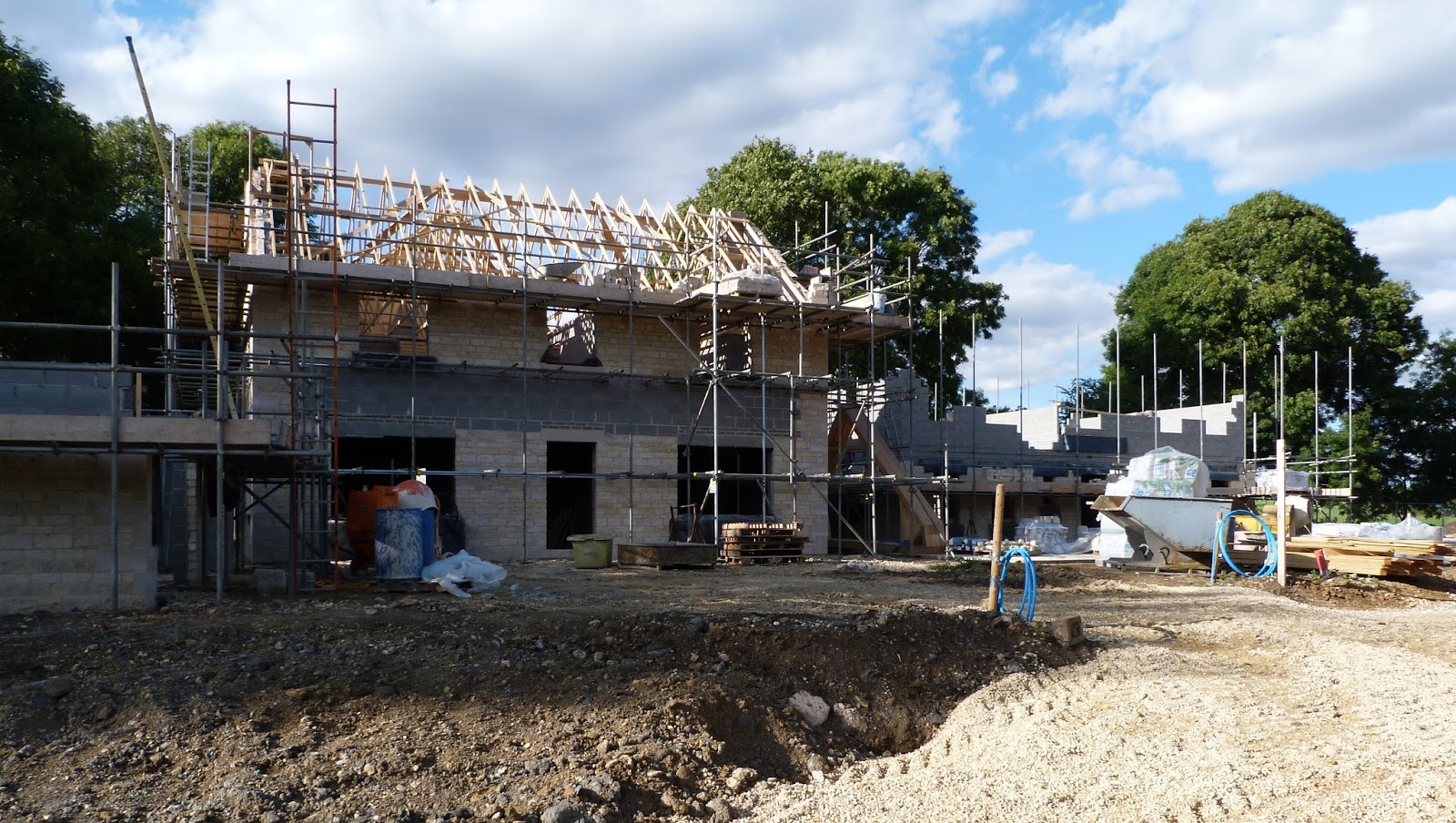
The area of breezeblock on the front elevation of Plot 1 will be hidden by a slate roof extending the width of the building over the two bay windows.

Plot 1 now with roof timbers erected; Plot 2 almost at first floor level 

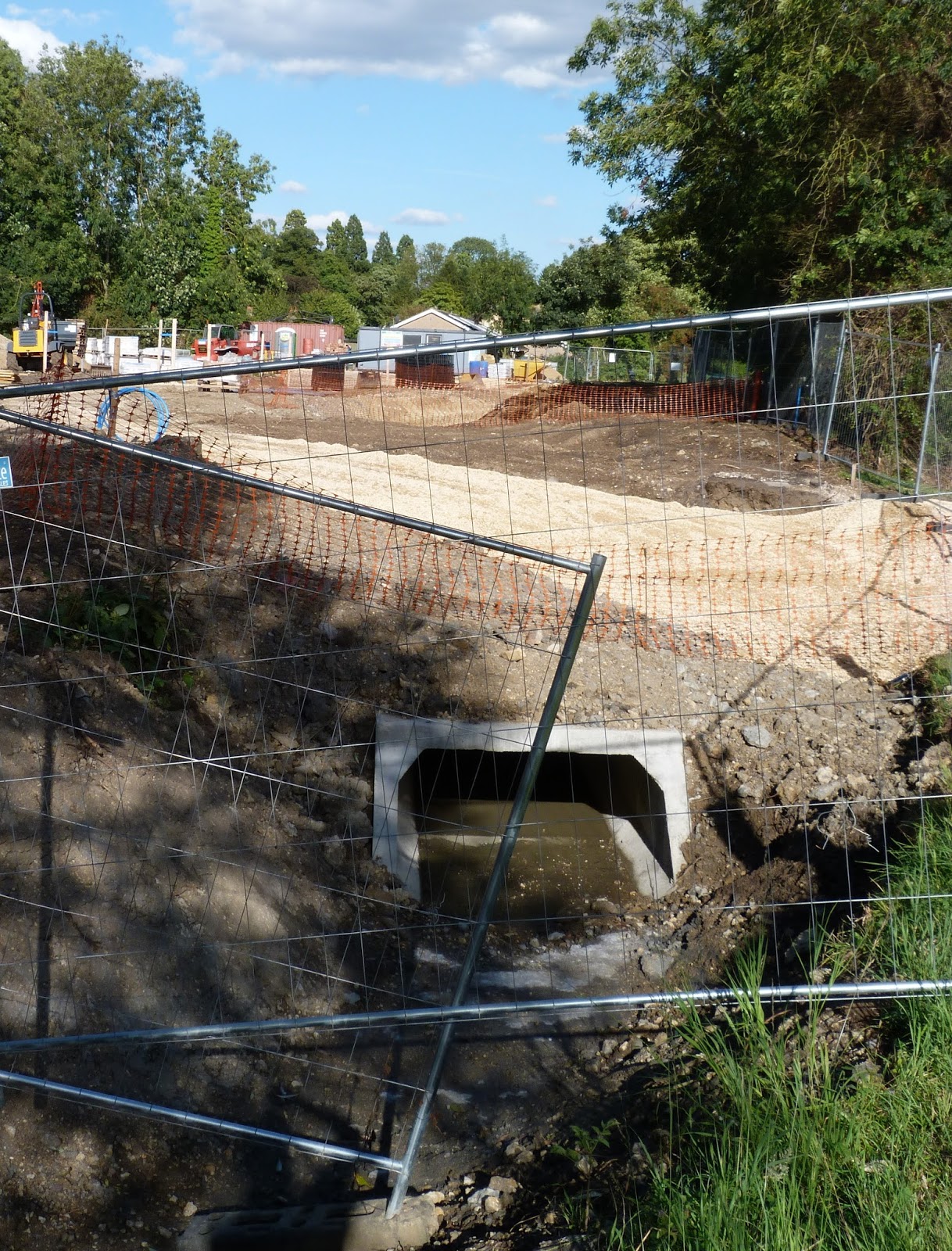
The planning permission has certain conditions, one of which is that prior to the commencement of construction of any building(s) or commencement of the use, the vehicular access to the development must be in accordance with the Proposed Site Plan. This has required a new concrete culvert that will allow access over the beck to what will be a gated private road to the development. This is located at the south west corner of the site.

Culvert - and main access to the development

A new footpath has still to be incorporated along the road frontage to link up with the existing footpath near the bungalows. New tree planting will enhance the area too.

No dwellings can be occupied until the private driveway and new footpath have been completed.

Hodgson Close

As can be seen from the Public Notice, the proposed name for the private drive is 'Hodgson Close'.

Naming of street

You might be interested in some of the history behind this name.

George Hodgson was a wealthy industrialist from Bradford in Yorkshire, who took up residence of Nocton Hall in late 1889. He was a very good friend of Lord Ripon, the well-respected owner of what was then deemed the finest agricultural estate in England.

Lord Ripon gave no explanation as to why he had decided to part with his family home, other than he felt the financial strain of maintaining the estate was now beyond his resources. However, he was clearly determined that the state of perfection which prevailed in the park and family areas should continue... and was confident his legacy for the Estate would continue through the Hodgson family.

History well documents how the Ripon family had contributed much to shape Nocton, so much so that a feeling of real security existed in their relationship with the villagers. To lose an individual who had served them all with so much consideration, was an unexpected blow to the community. Coming as he did a complete stranger to Nocton, the villagers and tenants were shattered by the news of George Hodgson having purchased the Estate. That said, his tenure was not to last long at all.

George Hodgson died in 1895 and his eldest son John moved to Nocton. John and his daughter-in-law Ann [the tall and beautiful daughter of Joseph Craven, the first Member of Parliament for Shipley], brought a family of six to the Hall, five sons and one daughter. The seventh child, another daughter, arrived at Nocton Hall. Unfortunately, John Hodgson's health was also to decline, and in 1902 he died at the Hall leaving the running of the estate in the hands of his son Norman, then aged only 25.


The grave of John Hodgson at All Saints Church, Nocton
Norman set to work, to give the estate a high polish. The Hall was redecorated and wherever possible, labour saving devices installed to give the staff greater help and efficiency. The grounds near the Hall were the first to have the flower borders stocked with a full variety of shrubs and herbaceous plants. The rose borders were enlarged and filled with the varieties most suited for a colourful summer display. Species of rhododendron, first planted by Lord Ripon, were ordered, to add a mass of colour to the side walks through the nearby woods and the 400 acre forest known as 'The Big Wood' received an additional number to enhance its beauty, already famous in Lincolnshire for its rhododendrons and the fantastic displayof lilies of the valley and bluebells. Those who are old enough will recall the sheer magnificence of the Hall grounds and park.

The Hodgson family went on to have a worthy and valued connection with the Nocton Estate, until it was sold to Messrs W H Dennis towards the end of 1919.

[Extracts taken from 'The Revelations of an Imp' by Douglas Craven-Hodgson]

Saturday, 24 January 2015

Nocton Hall - JH Dennis

A Tribute to Don - Nocton Hall

This lovely email was received on Thursday 22nd January, along with some photographs:

"This may , or may not be of interest to anyone ! You may just think Batty woman. And that's fine too !!

I was bumbling about about looking for snippets of family history ......my grandfather was J H Dennis who lived at Nocton Hall in the 1920s, when I chanced on a post written by Geoff Hall titled A tribute to Don .......my grandfathers dog ! Mr Hall had spent many hours finding and clearing the undergrowth from Dons gravestone...I was really very touched !!

Three years have passed and poor old Dons gravestone may be reclaimed by brambles and Geoff Hall moved away! However I am going to try sending another photo of the highly esteemed canine in hopes that someone may still be in touch with Geoff.


Not being at all computer literate - will see what happens !!

Linda Baker, Oxfordshire"

'Don'

'Don'

'Don' died June 23rd 1931. Age 12 years 3 months.

Footnote:
You may like to know I have replied to the kind lady concerned, enclosing more information about her grandfather and great-grandfather and directing her to specific entries on the blog and the web in general. The following photo was taken on the 22nd January and incorporated within the reply:


In memory of my dog 'Don'

I received this email in response:

"Dear Geoff ,

How very very kind and thoughtful of you to send me all that information. I cannot thank you enough !  I had a very sketchy idea of some bits, but most was a revelation to me !
My mother was youngest but one and was over 40 when she had me ,so all my cousins were much older than me.........the one that got left behind !!  Oh how I wish I had taken more interest as a youngster.  But you just think yeah yeah yeah.  Sadly she died when I was 21.
       
My grandfather sounds a real bounder... for want of a better word ... also beginning with B !  Fancy holding the choir boys at gun point ! I wonder if granny's cake made up for it ?!  I wish I had more family members with whom to share the story.
        
I did come up to Nocton in the mid 90s... ish.  The hall seemed to still in use as a res. home.  I didn't like to do too much poking around. I also saw great grandfather Williams statue at Kirton.  The photo is brilliant... I didn't have one.


It is very sad to see the hall in such disrepair... but as you say it must be a wild life haven and you certainly don't want a theme park or housing estate !!  I am really pleased you and fellow residents of Nocton are able to walk the ground and would love to come to see it myself I will be in touch if I do.

How bizarre that our correspondence was fired by a mutual interest in a dog who died nearly 84 years ago !....either mad or english !!

Once again my heartfelt thanks.

Very best regards to you and your family.  Linda"

Sunday, 23 June 2013

Our Village Hall

Introduction

I thought the readers of this blog might be interested in some of the background history to our Village Hall, how it came to be owned by the Parish Council and then managed by a Village Hall Management Committee. Much of the information contained below has been gained from my own personal research, during which time I discovered there was a problem with the Title to the land.

Volume 2 of ‘Nocton – The Last Years of an Estate Village’ has been a useful reference, but I have tried to supplement this with other information. All of this data is available in the public domain for those who take the trouble to research it, but as far as I am aware, it has never been brought together in one place in a linear date form. For some it will be old news, but for others it may be of interest.

This will be the first of three blog entries.

Early Days

1936
On the 1st May 1936, James Herbert Dennis sold Nocton Estate to Smith's Potato Crisps (1929) Ltd & Smith's Potato Estates Ltd. During their tenure, a certain Mr Ireson became General Manager. Both he and his wife fulfilled a philanthropic role in the estate community, where they were instrumental in locating an old corrugated iron building from Sleaford Market Place that could be used as a village hall for Nocton.

The building had previously been used as a community centre during the war, housing at one time the Sleaford YMCA. After much negotiation with Sleaford Council, the building was purchased and suitably transferred to Nocton and located on the current site. The Ireson’s also sourced two other Village Halls, one for Dunston and another for Wasp’s Nest.

1946
Smith’s Potato Estates Ltd was the major employer in the area and had a number of tied properties in the village. Many villagers worked on the Estate, spending their leisure time in the Village Hall. There are still fond memories of those times.

Nocton Village Hall was officially opened on 28 September 1946 and soon became the social hub of the community. Over the years many village organisations have used the hall for their activities e.g. Arts Group; Baby Clinic; Bowls Club; Friendship Club; Heritage Group; Parish Council; Social Club; Tufty Club; Women’s Institute; Young Men’s Club and Youth Club. More details can be found in the publication mentioned in my introduction.

1970
All this was about to be threatened though. On the 26 March 1970, Smith's Potato Estates Ltd sold the Nocton Estate to a subsidiary (The Smith's Food Group Ltd) and this soon entered liquidation. The Liquidators sold Nocton Estate to Toms Foods Ltd on 5 February 1971.

Nocton Village Hall and a recreation ground to the rear of the building had only been leased to Nocton Parish Council, but fortunately this was continued by Tom’s Foods Ltd. A new lease was prepared, dated 25 March 1973 and scheduled for 30 years, but before long the Nocton Estate changed hands again, this time to British Field Products Ltd.

1975
The sale of Nocton Estate to British Field Products Ltd took place on 4 August 1975 at a cost of £3,098,000. British Field Products was actually a subsidiary company of the Guardian Royal Insurance Group and traded as 'Nocton Farms Ltd'.

It was during their period of ownership that Nocton Village Hall came to be owned by the Parish Council. British Field Products Ltd made a generous offer to legally transfer the Village Hall and its associated land to the Parish Council for the benefit of the local community.

1979
Discussions were actually under way to draft a Conveyance, when the hall was tragically burnt down on 2 January 1979. It was subsequently discovered it was underinsured.

With the cost of rebuilding the hall standing at £38,000 and the insurance only paying out £28,000, there was a significant shortfall. Jim Smart (who was General Manager of Nocton Farms and responsible for the Conveyance) felt it was now up to the villagers to find the balance. As a result, the whole village rallied to the cause and within two years a new brick-built hall was constructed and it opened to the community on 1 November 1980.

1980
Jim Smart (who retired from Nocton Farms in December 1980) was Chairman of Nocton Parish Council when he signed the Conveyance document dated 13 July 1981, alongside George Thomas Dickinson – Clerk. The recreation ground to the rear of Nocton Village Hall remained subject to a leasehold arrangement though.

[to be continued]

Tuesday, 21 February 2012

A tribute to 'Don'

I obtained a copy of the following image a month or so ago and set myself the task of locating the whereabouts of this touching tribute dated 23 June 1931. I was told it was somewhere beside the approach road to Nocton Hall, but no specific location was given:


Looking at the background to the image, I identified what I thought must be the boundary of the walled garden of Nocton Hall. I therefore decided to complete a methodical grid-search of the ground from the wall to the roadway. This was somewhat difficult to accomplish due to the masses of bramble undergrowth that have since infested the area. After tramping around for nearly an hour, working my way through metre-high thorned bushes, resulting in bleeding legs, I glimpsed what I thought was a piece of polystyrene and to my joy discovered the hidden gravestone.

I decided there and then to commit to clearing the vegetation, to free this sentimental memorial from its suffocating entanglement and clean it of the moss and algae that obscured the inscription. This morning I managed to fulfil that promise - you can see the results below:

In memory of my dog 'Don'
For 12 years my faithful companion, by city lights and village signs or down the snowclad paths.
But then I wondered, who exactly was 'Don'. Is there an image of this faithful companion still in existence?

After trawling through Sheila Redshaw's photograph albums, I managed to find an image of J.H. Dennis... and standing faithfully alongside him, is 'Don'.

Frank and 'Taffy' Dennis with his dog, Don
May this fitting tribute lie undisturbed and unforgotten for many more years to come.
________________________________

Thursday, 25 January 2007

Nocton Hall - 2nd World War and beyond

Nocton Hospital


In 1948, Nocton Hall and about 100 acres of adjoining land were requisitioned by the Air Ministry. The Hall (used as the living quarters for the female officers of the RAF Medical staff), wards and other buildings were fully renovated. Married quarters for officers and men were also built. This General Military Hospital became part of a 740-bed RAF medical facility until 1984.

The hospital was then leased to the United States Airforce as a wartime contingency hospital during the Gulf War. More than 1,300 US medical staff were sent to the hall - many were billeted at RAF Scampton. In all that period, only 35 casualties had to be treated.

RAF Nocton Hall was finally handed back to the British Government in September 1995. It was then bought by a private owner who turned the hall into a residential home.

Nocton Estate


The Nocton Estate came under the ownership of a company - Agricultural Estates Ltd. F Le Neve Foster advised on 9th July 1962 (in a letter to one Mr Ireson):
“So far as I recollect, the Estate, with other large farms, was sold by Dennis and Sons to a public company floated by Hatry in 1920 to which the public were invited to subscribe on the basis of a valuation by Knight, Frank and Rutley. This flotation has particular interest because I believe it was the only occasion on which the Public were invited to subscribe to a purely farming enterprise. It was not a success and never paid a dividend.”

From 1948 the Company commenced to renovate and repair the houses and buildings, which over the years were brought into good condition. The horses were replaced by a fleet of sixty tractors, twelve combines, pick up balers, a fleet of lorries, sugar beet harvesters, mechanical potato planters, and other modern machines and this fully mechanised the Estate.

The light railway was later removed and some twenty miles of roadways laid, thereby enabling potatoes to be loaded direct from field to factory. Indoor potato stores were erected and buildings altered for controlling chitting of seed potatoes. Two corn dryers were erected which with the storage capacity of the Mill could hold 4,500 tons.

The company has also paid particular attention to the development of the social amenities in the village and large halls, each with a Club licence for serving drinks, were provided in Nocton and Dunston.

Nocton, it is very evident, has seen more changes than many an English village so deep in the heart of the country. Formerly bound up in the fortunes of the Hall, Nocton witnessed large-scale commercial farming. It was part of a progressive era in agricultural history, though to see its cottages, a gracious farm or two, a tiny post-office, the quiet stone walls and colourful cottage gardens, one might imagine it to be olde-worlde, peaceful, and untouched by the modern spirit of change.

Wednesday, 24 January 2007

Nocton Hall - D'Arcys

Domesday Book

In 1086, the date of the Domesday Book, the two English owners had given place to a single foreigner, Norman de Adreci, or D'Arcy, one of the companions of William the Conqueror.
N.B: in Domesday, Nocton is spelt "Nochetune" and in later documents, "Noketon" and "Nokton".

In addition to Nocton, D'Arcy was given 32 other parishes in Lincolnshire. The parish must have been of some importance in those days because D'Arcy preferred to live there. The parish numbered 41 households including the Lord of the Manor, the priest, "twenty six sokemen, nine villeins, and three bordars" with nine plough teams and two "talliage"of £2.0s.0d. The value of the manor in 1086 was reckoned at £10.0s.0d.

For eleven generations from circa 1070 to 1350 the D'Arcys held the lordship of Nocton; for twelve more generations from 1350 to 1660 their descendants on the spindle side continued the succession. This family improved the Estate and the Hall, which must have existed in Ulf's time, but apparently no attempt was made to fortify the Hall as no trace of anything in the shape of a castle exists.


Norman D'Arcy's son and successor, Robert D'Arcy, lived in the days of the great monastic revival under Henry I. and Stephen. He gave the churches of Nocton and Dunston to the Benedictine Monks of St Mary's Abbey at York, and granted certain lands at Nocton and Dunston to the Cistercian Monks at Kirkstead Abbey, near Woodhall Spa.

Nocton Park Priory


It was Robert who founded the Priory in the Park at Nocton, dedicated to St Mary Magdelene for a Prior and four Canons of the Order of St Augustine. The Priory stood in what is still known as Abbey Hill and the only remains of it are some large stones, broken hillocks and uneven turf on the rising ground which overlooks Nocton Fen. Some broken pottery was found on the site a few years ago and presented to Lincoln Museum.

N.B: the ashes of a Mr JH Dennis (who latterly owned the Nocton Estate) are scattered in a small fenced enclosure on the site.

The D'Arcys, throughout the ages, were Lords of Parliament, most of them were soldiers, fighting for the King abroad or against the King in several civil wars. One, Norman, in 1215 was one of the barons in arms against King John, from whom they exacted the Great Charter on June 15th. Thomas D'Arcy (who married a d'Eyncourt of Blankney) won a law suit which he brought against the Bishop of Lincoln for appointing a Prior of whom he disapproved.

Nocton Priory - seal
Thomas's son, another Norman D'Arcy lost a law-suit which a Prior brought against him for stopping up a right-of-way from the Priory to the Watermill at Dunston. Prior Lane at Dunston is still in existence, leading from the old mill in the direction of Abbey Field. It probably follows the line of the main drive through Nocton Wood, past the trees now known as the Nine Brethren and the Odd Tree, as it is quite obvious these were, years ago, boundary trees and probably divided the Lord of the manor's land from the Priors.

The importance of the D'Arcy barony must have entitled its holders to a writ of personal summons to the great council of the realm from the earliest days in which these special writs were used to distinguish the barons from the tenants-in-chief of lower rank. We find Norman D'Arcy personally summoned to the Parliament of September 1283, and the status of the Lords of Nocton as hereditary barons by writ was clearly established in the person of his oldest son, Philip, born 1259 who was summoned in like manner to every Parliament held from February 1297 to January 1307.

In 1314 another and graver quarrel arose between the Prior and the Lord. Matters came to such a pass that the Prior addressed to the King's Council a petition setting forth that Philip D'Arcy "keeps in his Manor of Nocton several unknown men who are sworn never to to cease from doing all the damage and injury that they can to the said Prior and his house, and who indeed are constantly from day to day seizing the said Prior's farm-beasts, both plough-oxon and others, and doing divers other injuries; so that for this reason the lands belonging to the said Prior lie untilled and unsown, and for those things the said Prior prays that a remedy be provided him". The Council appointed three justices to examine and decide the case, but unfortunately no exact record can be found of the trial or its result; but one account states that Philip was bound over to keep the peace for twelve months.

This same Philip joined in the revolt of Earl Thomas of Lancaster against the King, and was made prisoner with him at Boroughbridge in 1322. His estates were forfeited, but were restored shortly after the execution of the Earl, and Norman then accompanied Edward III. to his Flemish Wars of 1338-1339.

Philip died on March 25th 1340 and on his death Sir Philip de Lymbury and Agnes, wife of Sir Roger de Pedwardine, relatives through marriage, were declared coheirs of the D'Arcy Estates. From Philip's death to 1444, Nocton is totally without history. To fill the blank we have only the pedigrees showing how the Lymbury share of the estate descended to one, Nicholas Wymbishe. It was during this period that the estate was divided between the coheirs, with some probably sold, thereby reducing the once vast acreage.

During the D'Arcy period several attempts were made to establish a market at Nocton which might have considerably influenced its material well being and social development. In 1214 the second Norman D'Arcy obtained from King John a Charter for himself and his heirs to hold a market at his manor in Nocton "but so that it should not be to the injury of the neighbouring markets". The same Charter included the grant of a warren in the same manor. But the forfeiture of Norman's estates in the winter of 1215-6 probably involved the deprivation of this Charter.

In 1281 his grandson, the third Norman, being summoned to show by what tenure he held his estates, and what "liberties" he claimed in them, thus enumerated his rights at Nocton - free warren, gallows, a market every Tuesday, assize of bread and ale, and all other liberties pertaining to a market, and a fair every year on the eve and day of St Mary Magdelene" - 21st and 22nd July. There is no trace that these rights were ever granted.

During the plague known as the 'Black Death', the Vicar and Prior died and also the last of the D'Arcy family. For the next fifty years Nocton was at "sixes and sevens" until a Nicholas Wymbish, whose great grandmother had been a D'Arcy, bought out the interest of his cousins and restored order and prosperity to the parish. He enriched the Priory by gifts of land and houses in London. Nicholas Wymbish was a clergyman, a Canon of Lincoln and Archdeacon of Nottingham; he was also a lawyer and held high office in the Court of Chancery.